


Indian Railways is preparing to significantly expand private sector participation in railway infrastructure, with 54 projects worth around Rs 1.8 lakh crore identified for development through public-private partnerships (PPP).
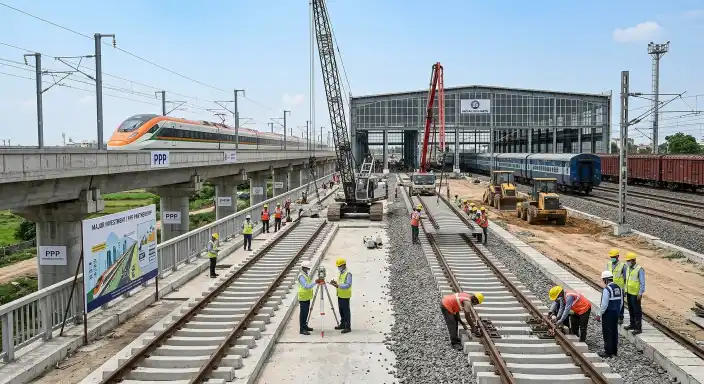
Nearly half of the proposed projects involve railway track construction, making the planned PPP pipeline considerably larger than the Railways’ existing portfolio of privately developed projects.
Existing PPP Projects
According to the Railway Ministry, 18 projects worth Rs 16,686 crore have already been completed under the PPP model.
Another seven projects worth Rs 16,362 crore are currently under implementation. These include projects focused on coal connectivity and port connectivity.
Major Railway Infrastructure Projects
The proposed PPP pipeline includes several large-scale infrastructure projects. Among them are the Rs 9,562-crore Itarsi-Manikpur third-line project and the Rs 8,321-crore Haridaspur-Vizianagaram fourth-line project.
The plans also include seven trainset maintenance depots with an estimated investment of Rs 21,000 crore and wagon maintenance facilities worth around Rs 6,400 crore.
Power projects form another major part of the proposed pipeline, with investments estimated at Rs 44,500 crore.
New PPP Models
To attract greater private investment, Indian Railways has introduced two new PPP structures, the Development Partner Model and the Hybrid Annuity Model (HAM).
The ministry shared these plans with the Parliamentary Standing Committee on Railways while responding to earlier recommendations related to its demand for grants.
Panel Calls For Easier PPP Approvals
The parliamentary committee has recommended simpler approval procedures and clearer risk-sharing mechanisms to make railway PPP projects more attractive to private investors while protecting the Railways’ financial interests.
The panel also called for stronger participation from state governments and local authorities in new railway line and gauge-conversion projects.
Greater coordination with state and local bodies could help address challenges related to land acquisition, government clearances and utility shifting, which often delay major railway infrastructure projects.
