


India is advancing plans to develop and operationalise at least five indigenous small modular reactors by 2033 as the country looks to expand nuclear power and reduce dependence on fossil fuels.
The Bhabha Atomic Research Centre is developing multiple reactor designs, including a 220-megawatt Bharat Small Modular Reactor, a 55-megawatt reactor and a high-temperature gas-cooled reactor designed for hydrogen production. Tarapur in Maharashtra has been approved as the site for the 220 MW and 55 MW projects.
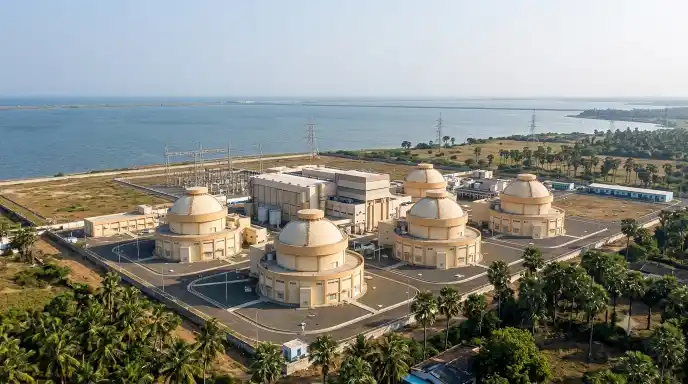
India currently has around 8.8 GW of installed nuclear capacity and aims to increase this to about 22 GW by 2031–32. The country’s longer-term target is to expand nuclear capacity to 100 GW by 2047.
Small modular reactors are expected to play an important role in this expansion, offering smaller-scale nuclear power options for industries and other applications.
The push comes as India seeks to expand clean energy and reduce its reliance on coal and other fossil fuels. The country has also opened its nuclear generation sector to private participation, with major business groups exploring opportunities in the sector.
With indigenous reactor designs under development and private investment interest growing, India’s small-reactor programme could become a key part of its long-term energy strategy.
