


India has announced a major expansion of its electronics manufacturing strategy with billions of dollars in new incentives for smartphone production and semiconductor development, aiming to strengthen its position in the global technology supply chain.
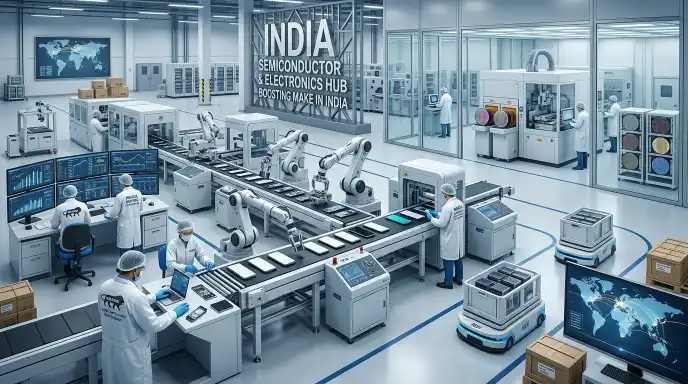
The government’s new Mobile Phone Manufacturing Scheme will provide ₹625 billion (around $6.5 billion) in incentives over five years. Smartphone manufacturers will receive benefits based on eligible sales, with additional incentives for companies that source key components and sub-assemblies within India.
Alongside the smartphone manufacturing push, the government has committed an additional ₹1.28 trillion (around $13.3 billion) to strengthen domestic semiconductor production. The expanded support will focus on chip equipment, materials, semiconductor design and research capabilities.
India has already emerged as a growing smartphone manufacturing destination, attracting major companies including Apple, Samsung, Xiaomi, Oppo and Vivo. Apple began assembling iPhones in India in 2017 and has since expanded production through partners such as Foxconn and Tata Group. Around a quarter of Apple’s iPhones are now manufactured in India as the company diversifies its supply chain beyond China.
However, India still faces significant competition from China, which continues to dominate global smartphone production. According to industry estimates, China accounted for about 63% of global smartphone manufacturing in 2025, while India contributed around 18%.
The latest policy marks a shift from focusing only on final assembly towards building deeper manufacturing capabilities, including component production, research and development, and local value creation.
The scheme also aims to encourage the growth of Indian smartphone brands by offering additional incentives for product design and research. The government believes stronger domestic companies, supplier networks and engineering capabilities will help India capture a larger share of the global electronics market.
The smartphone manufacturing programme is expected to run until March 2031 and could generate around ₹39 trillion ($405 billion) in mobile phone production while creating thousands of direct jobs.
Industry experts believe the incentives could help India reduce dependence on imported components, especially as global companies look for alternatives to China-based supply chains.
India’s combined focus on smartphones and semiconductors reflects a larger ambition to build an electronics ecosystem similar to those that made China a global manufacturing powerhouse. While the country has succeeded in attracting large-scale assembly, the next challenge will be developing advanced suppliers, technology capabilities and high-value manufacturing within India.
