


The government has approved a major funding push for India Semiconductor Mission 2.0, with the Ministry of Finance clearing a Budget allocation of around ₹1.25 lakh crore aimed at strengthening the country’s chip manufacturing ecosystem.
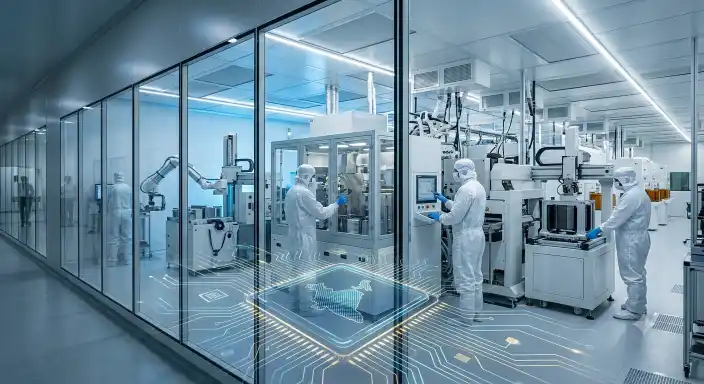
The second phase of the mission is designed to expand domestic semiconductor capabilities across the entire value chain, including equipment, raw materials, indigenous chip design, and other critical components needed for advanced electronics production.
Officials said the Department of Expenditure under the Ministry of Finance has approved the proposal, marking a significant jump from the ₹76,000 crore allocated under the first phase of the programme.
Push to Build End-to-End Chip Ecosystem
Announced in the Union Budget earlier this year, ISM 2.0 focuses on creating a complete semiconductor ecosystem in India rather than isolated manufacturing units. The initiative aims to attract global players while also strengthening local design and production capabilities.
The goal is to position India as a major global semiconductor hub by supporting high-tech manufacturing and reducing dependence on imports.
Manufacturing Projects Gain Momentum
Officials described semiconductor manufacturing as a long-standing national ambition, noting that 12 projects have already been approved under the mission. Some of these have reached commercial production, while others are in advanced stages of development.
One more facility, CG Semi, is expected to be inaugurated soon, with further projects likely to be launched later this year. According to officials, these developments mark a major milestone in India’s journey toward domestic chip production.
Growing Global Standing
Government representatives said India has strengthened its position in the global technology ecosystem over the past decade, emerging as an influential voice in setting standards and shaping innovation policies.
Under ISM 2.0, priority will also be given to semiconductor design companies, building on the foundation laid under the first phase of the mission.
Investments Under ISM 1.0 Continue to Grow
The first phase of the India Semiconductor Mission has already approved 12 manufacturing projects, with a total investment pipeline of around ₹1.64 lakh crore. Companies involved include Tata Electronics in partnership with PSMC of Taiwan, Micron Technology, Kaynes Semicon, CG Power, HCL–Foxconn joint venture, Suchi Semicon, Crystal Matrix, and others.
With ISM 2.0, the government is now aiming to scale up India’s role in global semiconductor production and establish a more self-reliant electronics manufacturing ecosystem.
