


Ashok Leyland, India’s second-largest commercial vehicle maker and among the world’s leading bus manufacturers, is stepping up its focus on advanced defence mobility solutions as it looks to modernise key platforms used by the Indian Armed Forces.
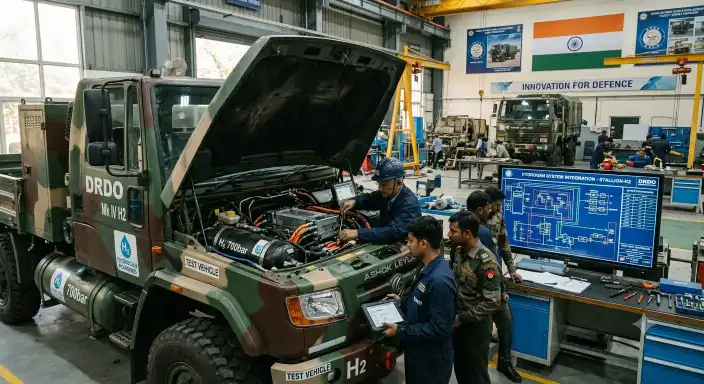
The company is actively investing in new-age technologies to upgrade its flagship military vehicles, marking a shift towards cleaner, smarter and more versatile defence transport systems.
Hydrogen-Powered Stallion Under Development
Ashok Leyland is working with the Vehicle Factory Jabalpur (VFJ) to develop a hydrogen engine variant for its widely used Stallion range of military vehicles. The update was confirmed by Amandeep Singh, President of the company’s Defence Business, who said the collaboration is aimed at introducing hydrogen-powered options for defence use.
The initiative aligns with India’s broader push toward alternative fuel technologies in strategic sectors, while also reducing dependence on traditional fossil fuels in military operations.
Multi-Fuel Defence Mobility Strategy
This hydrogen project adds to Ashok Leyland’s existing capabilities in electric vehicles, CNG, and LNG platforms. The company is building a multi-fuel portfolio designed to meet the varied demands of military operations across different terrains, including high-altitude regions and desert environments.
The goal is to provide the armed forces with flexible mobility solutions that can adapt to diverse operational needs while supporting energy transition efforts.
Shift Toward Smart and Sustainable Military Vehicles
With warfare increasingly driven by technology, Ashok Leyland is also exploring autonomous systems and next-generation mobility platforms. The focus on hydrogen and intelligent vehicle systems reflects a broader industry shift toward sustainable and technology-driven defence solutions.
Defence experts expect these developments to play an important role in strengthening indigenous innovation and could help set new benchmarks for future military vehicle design in India.
