


Cash logistics companies responsible for ATM replenishment have approached banks, warning of a sharp rise in operating expenses driven by fuel inflation, wage increases, and compliance costs. The industry estimates overall costs could jump by 15–20% in the near term, prompting calls for a revision in ATM interchange fees.
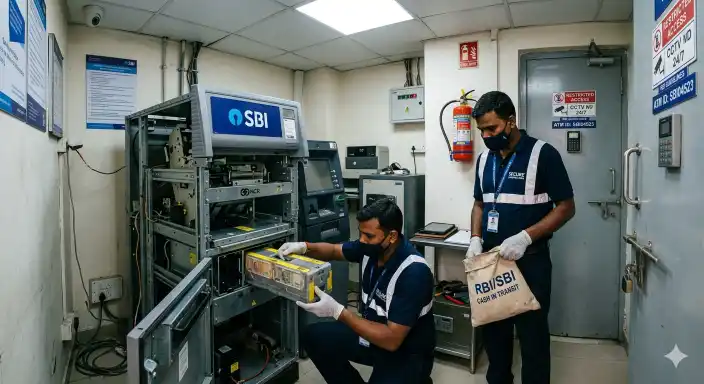
Industry flags rising fuel and wage burden
In a representation to the Indian Banks’ Association (IBA), the Currency Cycle Association (CCA), the sector’s self-regulatory body, said day-to-day operations are being significantly impacted by external cost pressures.
Fuel prices, the association noted, have continued to rise amid geopolitical tensions and volatility in global crude markets. This has directly increased expenses linked to cash movement vehicles and route operations.
The group also highlighted that upward revisions in minimum wages across several states have further added to operational costs.
Major players back demand for revision
The association includes key cash logistics firms such as CMS Info Systems, SIS Prosegur, Brink’s India, Radiant Cash Management Services, Sequel Logistics, SIS Cash Services, Writer Safeguard, and Logicash Solutions.
Companies including CMS Info Systems, Brink’s India, and SIS Prosegur have separately urged the IBA to increase ATM replenishment charges to offset rising costs.
Costs expected to rise up to 20%
In a letter to IBA CEO V G Kannan, CCA said the combined impact of fuel inflation and wage hikes could push industry-wide costs up by 15–20%.
CCA secretary general U S Paliwal said fuel costs remain a major pressure point, citing global crude volatility and geopolitical uncertainty as key drivers.
He added that rising minimum wages in several states have materially increased overall operational expenses.
More ATM trips adding pressure
Industry insiders also pointed to a demand-supply mismatch in cash availability, which has increased the frequency of ATM replenishment trips.
Between November 2025 and March 2026, replenishment visits rose by 11–12%, pushing fuel-related costs up by an estimated 8–10%.
Firms consider reducing ATM visit frequency
To control costs, the industry is exploring optimization of replenishment schedules. This could mean reducing ATM visits from daily replenishment to two or three times a week in locations where full daily refilling is unnecessary.
As Paliwal explained, many ATMs still retain 50–60% cash even after daily servicing, making more frequent visits economically inefficient in some cases.
