


Tesla has reportedly dropped its plan to set up an electric vehicle factory in India, even as it pushes ahead with major expansion in autonomous driving technology overseas.
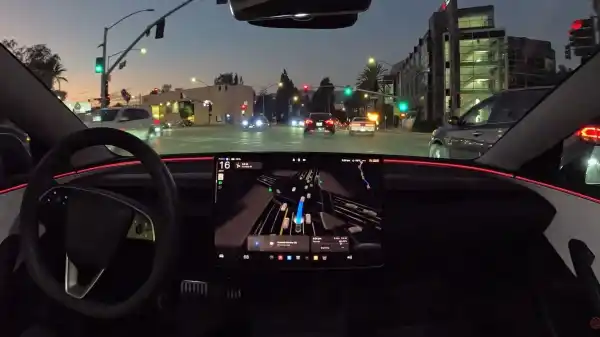
The company has now launched its full self-driving system in China after years of regulatory delays and discussions. The rollout follows Elon Musk’s recent visit to Beijing during a high-level business trip linked to a summit between U.S. and Chinese leadership.
In a post on X, Tesla confirmed that its Full Self-Driving system, also called FSD Supervised, is now active in several countries, including China.
The technology relies on artificial intelligence trained using millions of real-world driving video clips rather than fixed programming rules, allowing it to continuously improve through data.
Approval in China is seen as a major win for Tesla, especially in the world’s biggest electric vehicle market, and could help boost its sales momentum there.
Industry analysts believe the move may also accelerate competition in autonomous driving, pushing Chinese automakers to speed up their own development efforts. While companies like XPeng are advancing in the space, Tesla still maintains a lead in the sector.
Experts say this could trigger faster innovation across China’s auto industry, which has recently been under pressure due to slowing demand. Passenger car sales in April fell 21.5 percent year on year, according to industry data.
Tesla has not yet commented on the reported India factory decision or responded to related queries from authorities.
The company also said its FSD system is available in several other countries, including the US, Canada, Mexico, Australia, New Zealand, and South Korea.
