


Foreign ministers from BRICS nations have assembled in New Delhi for a high-level two-day meeting taking place amid escalating geopolitical tensions, including the Iran conflict, instability in West Asia, and global economic uncertainty.
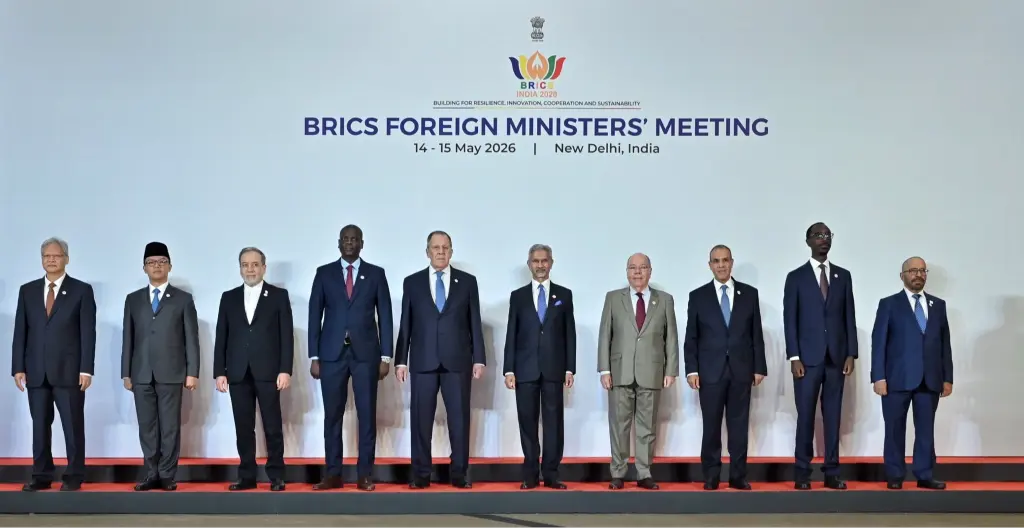
Addressing the gathering, India’s External Affairs Minister S. Jaishankar stressed the need for deeper cooperation among emerging economies to tackle conflicts, economic instability, supply-chain disruptions, climate challenges, and technological competition. He said BRICS must evolve into a stabilising force during a period of growing global uncertainty.
Jaishankar also highlighted the importance of collaboration in energy security, food supply, fertiliser access, healthcare, financial stability, and counterterrorism while advocating inclusive technological growth and transparent global governance. The meeting is being viewed as a key precursor to the 18th BRICS Summit that India will host later this year.
The meeting comes as the Iran-US conflict and disruptions around the Strait of Hormuz continue to raise concerns over global energy supplies and economic stability. The Gaza conflict and calls for an immediate ceasefire also emerged as major discussion points during the summit.
Iranian Foreign Minister Abbas Araghchi urged BRICS nations to take a stronger stand against what he described as violations of international law by the United States and Israel, while calling for a more balanced and just global order. Russian Foreign Minister Sergey Lavrov is also attending the meeting.
Observers say the Delhi gathering is especially significant because BRICS countries are increasingly positioning themselves as a collective voice for developing economies seeking reforms in global trade, finance, governance, and geopolitical decision-making. Analysts believe discussions around resilient supply chains, diversified markets, diplomacy, and peaceful conflict resolution could shape the future direction of the bloc.
