


As India prepares for its first human spaceflight mission, Gaganyaan, astronaut-designate Prasanth Balakrishnan Nair has spotlighted a critical yet often overlooked challenge, developing advanced space toilet systems.
Nair has urged Indian startups to step into this niche area, stressing that the world still lacks efficient and widely successful solutions for waste management in space.
Space toilets must operate in microgravity using airflow and precision engineering, ensuring hygiene and safety in extreme conditions. These systems are vital for astronaut health, especially during long-duration missions.
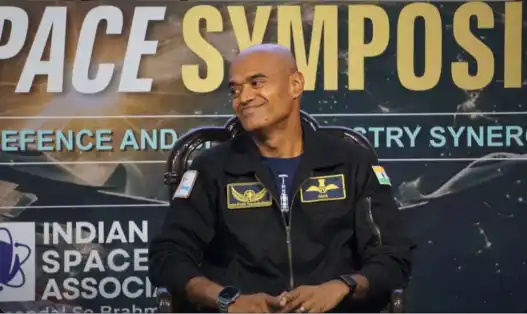
Speaking at a defence space symposium, Nair also pointed out that innovation in such areas is essential as India builds its own capabilities for human spaceflight, rather than relying on foreign technologies.
According to him, India’s upcoming missions will follow multiple stages, with uncrewed launches expected soon and human missions targeted around 2026–2027, highlighting the urgency of developing life-support systems.
The Gaganyaan mission aims to send Indian astronauts into low-Earth orbit and bring them back safely, making India one of the few nations with independent human spaceflight capability.
Nair’s call reflects a broader shift in India’s space ecosystem—where startups are increasingly being invited to solve complex engineering challenges, from propulsion to life-support systems, shaping the future of space exploration.
