


India is planning to build what could become the world’s highest railway station in Ladakh as part of the proposed Bilaspur-Manali-Leh railway line. The station is planned at an altitude of approximately 17,244 feet (5,256 metres) beneath the Tanglang La mountain pass, potentially surpassing China’s existing record.
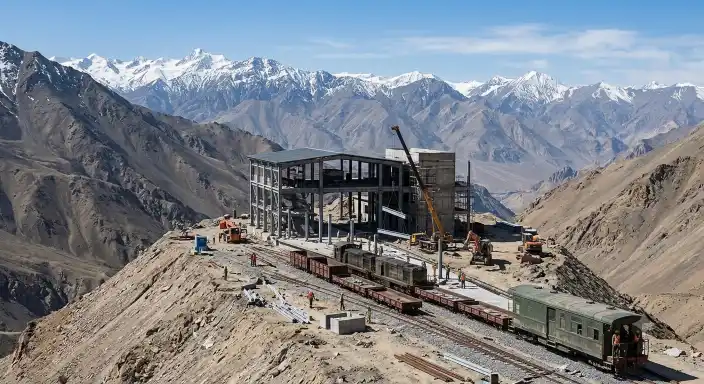
The proposed 489-km broad-gauge railway corridor will connect Bilaspur in Himachal Pradesh with Leh in Ladakh. Estimated at ₹1.31 lakh crore, the project is among India’s most ambitious railway infrastructure plans and is expected to improve connectivity to the strategically important border region.
According to the project details, the Railway Ministry has completed the survey and prepared the Detailed Project Report (DPR). However, construction approval is still pending, and no completion timeline has been announced.
India’s Proposed Station Could Surpass China’s Record
The proposed railway station beneath Tanglang La would be located around 188 metres higher than China’s Tanggula railway station on the Qinghai-Tibet Railway, currently recognised as the world’s highest railway station at approximately 5,068 metres.
If constructed at the proposed elevation, the Ladakh station would establish a new global record for railway infrastructure at high altitude.
Building a railway station in this region will involve significant engineering challenges due to extreme weather, low temperatures, difficult geological conditions and the rugged Himalayan terrain.
489-Km Railway Corridor with 270 Km of Tunnels
The Bilaspur-Manali-Leh railway line will pass through several important towns and locations across Himachal Pradesh and Ladakh.
The proposed route includes Bilaspur, Sundernagar, Mandi, Manali, Sissu, Darcha, Keylong, Sarchu, Pang, Rumtse, Upshi and Leh.
One of the project’s most challenging features is its extensive tunnelling requirement. Around 270 km of the 489-km railway corridor is expected to pass through tunnels, accounting for more than half of the total route.
The railway line is planned as an electrified broad-gauge corridor designed to provide all-weather connectivity through the Himalayan region.
Strategic Importance for Ladakh
The railway corridor has been identified as a strategic project by the Ministry of Defence. It is expected to improve the movement of military personnel, equipment, fuel and essential supplies to Ladakh, which currently depends heavily on road connectivity through high-altitude mountain passes.
An all-weather railway link could reduce transportation challenges during periods when heavy snowfall and extreme weather affect road access.
The project is also expected to support civilian connectivity, tourism and economic development in remote areas of Himachal Pradesh and Ladakh.
Project Awaits Construction Approval
Although the survey and DPR have been completed, the Bilaspur-Manali-Leh railway project has not yet received the necessary construction approval.
The estimated investment of ₹1.31 lakh crore, extensive tunnelling requirements and challenging Himalayan conditions make it a major infrastructure undertaking.
If implemented, the project could transform transportation to Ladakh while giving India a significant milestone in high-altitude railway engineering. Its proposed station beneath Tanglang La could also take the country’s railway network to a world-record elevation.
