


India has expressed its readiness to help establish food corridors through the Black Sea to facilitate the movement of Ukrainian grain exports, Ukrainian President Volodymyr Zelenskyy said after a telephone conversation with Prime Minister Narendra Modi on November 9.
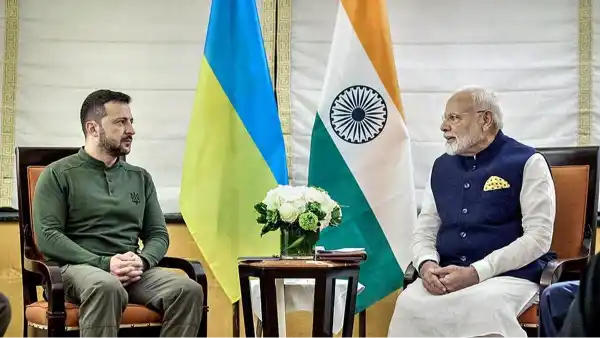
The two leaders discussed the Russia-Ukraine conflict, recent diplomatic developments and efforts to achieve a peaceful resolution. Zelenskyy also briefed Modi on preparations for the upcoming trilateral talks involving Ukraine, Russia and the United States in Abu Dhabi.
In a post on X, Zelenskyy said the leaders discussed Russia’s blocking of grain exports through the Black Sea. He added that India was ready to mediate in establishing food corridors and that Ukraine was counting on continued Indian involvement.
India’s Diplomatic Role in Black Sea Security
Zelenskyy said food security could be an important area where India could contribute to efforts to end the conflict. He urged India to explore dialogue with other world leaders to help bring the war to an end.
The Black Sea is a major route for Ukrainian agricultural exports. Disruptions to shipping and attacks on port infrastructure have affected the movement of grain to international markets, raising concerns over global food security.
Modi said India remained committed to contributing in every possible way towards a peaceful resolution. He also thanked Zelenskyy for sharing his views on the conflict, its humanitarian impact and diplomatic efforts.
India Also Engages Russia
Separately, External Affairs Minister S Jaishankar spoke with Russian Foreign Minister Sergey Lavrov on November 9. Jaishankar said their discussion focused on the Ukraine conflict and ongoing diplomatic initiatives.
India’s engagement with both Kyiv and Moscow comes ahead of the US-brokered peace talks in Abu Dhabi. The proposed discussions are expected to address diplomatic efforts to end the nearly five-year conflict.
The two leaders also agreed to maintain contact through their respective teams on food security and other bilateral issues.
