


US-based Maxwell Aircraft has unveiled the M1 Hybrid, a hybrid-drive amphibious aircraft designed to operate from both land and water. The aircraft is being developed for cargo and passenger transportation, with a focus on reaching remote locations where conventional airport infrastructure may be unavailable.
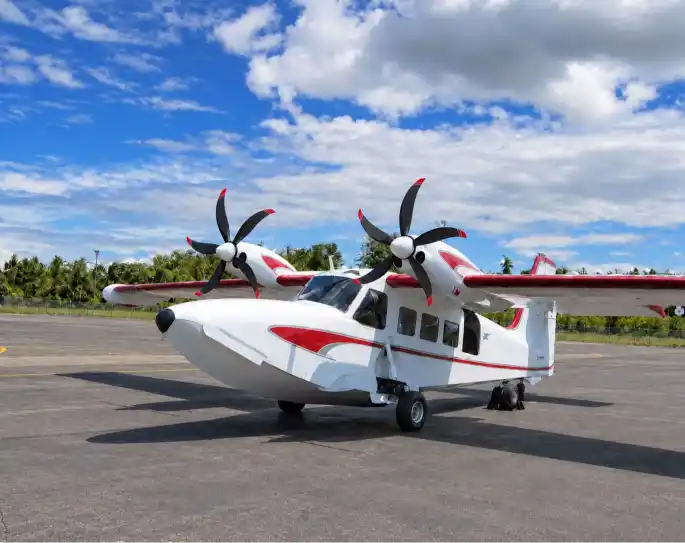
Its cargo version, designated M1 Hybrid Cargo (M1-HC), is designed to carry a payload of up to 2,000 pounds over a range of 1,000 nautical miles. The aircraft combines electric propulsion for take-off and initial climb with fuel-powered engines for longer cruise operations.
Hybrid Propulsion System
The M1 uses a patent-pending, mechanically coupled hybrid-drive architecture. Electric motors provide additional power during take-off and climb, while compression-ignition engines running on Jet A fuel are designed to power the aircraft during cruising.
According to Maxwell, the system targets up to 1,500 horsepower during take-off and initial climb, with approximately 300 horsepower combined during cruise. Using electric assistance mainly during high-power flight phases is intended to reduce the battery capacity and weight required for long-distance operations.
The company says this approach combines the performance benefits of electric propulsion with the energy density of conventional aviation fuel.
Designed for Land and Water Operations
The M1-HC features a five-foot-wide cargo door designed to support the loading and unloading of palletised freight. Its amphibious configuration allows it to operate from waterways as well as unimproved runways.
The aircraft’s airframe uses carbon fibre and Kevlar composite construction, based on the Gweduck amphibious aircraft design. The materials are intended to reduce weight and address corrosion concerns associated with conventional metal aircraft operating in marine environments.
Maxwell sees potential applications in island logistics, remote-community supply, disaster response, government operations and defence missions.
Aircraft Development and Commercial Use
The M1 Hybrid Cargo is being offered under experimental aircraft regulations, including certain commercial uses for government purposes. Its proposed payload, range and power figures are design targets and have not yet been demonstrated through flight testing.
The company is targeting initial flight testing in 2027. Certification and wider commercial passenger or cargo operations will depend on further development and regulatory approvals.
The M1 Hybrid reflects growing efforts in the aviation industry to combine electric propulsion with conventional engines. By using electric power during take-off and fuel-powered engines for cruising, Maxwell aims to develop an aircraft capable of carrying substantial cargo while accessing locations beyond the reach of conventional land-based aircraft.
