


Israel has published the final results of its 2026 general election, but the outcome has left the country facing political uncertainty, with neither Prime Minister Benjamin Netanyahu’s bloc nor the opposition securing enough seats to form a government independently.
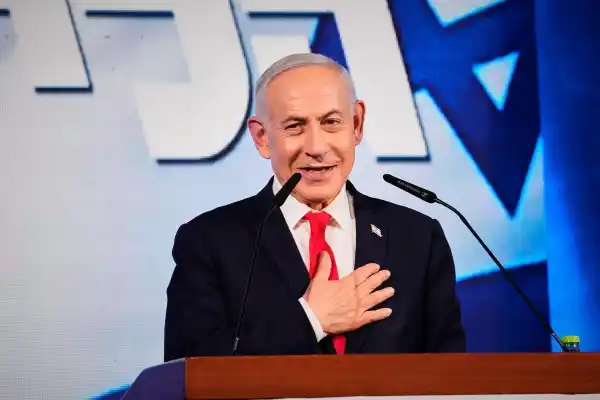
The Central Elections Committee announced that Netanyahu’s bloc holds 53 seats in the 120-member Knesset, while the opposition camp led by Gadi Eisenkot has secured 48 seats. Arab parties won a combined 19 seats, giving them a potentially decisive role in negotiations to form the next government.
The final results were published on October 30. The newly elected 26th Knesset is scheduled to be sworn in on November 10. The official results are expected to be submitted to President Isaac Herzog on November 4, following the completion of inquiries into possible errors or complaints.
The seat distribution highlights the difficulty of forming a stable coalition. A party or alliance needs at least 61 seats to command a majority in the Knesset. Netanyahu’s bloc is eight seats short, while Eisenkot’s opposition camp needs 13 additional seats without support from other parties.
Arab-led parties, which secured 19 seats collectively, could therefore play a crucial role in determining the next government. However, political differences and resistance to cooperation with Arab parties complicate the opposition’s path to power. Netanyahu has ruled out partnering with Arab-led parties, while Eisenkot faces difficult choices over whether to seek their support.
Several scenarios remain possible, including an opposition-led minority government supported by Arab parties, a broader unity government involving rival political groups, or prolonged negotiations that could eventually lead to another election.
President Isaac Herzog will consult party representatives and nominate the candidate he believes has the best chance of forming a government. Netanyahu remains caretaker prime minister during the process.
The election recorded a turnout of 77.9%, with more than 5.7 million votes cast. The results mark a significant setback for Netanyahu’s bloc, which previously held 68 seats, and leave Israel facing a challenging period of coalition negotiations.
