


Sugar prices across India have climbed sharply ahead of Diwali as festive demand from households and sweet manufacturers meets tight supplies. Ex-mill prices in Uttar Pradesh rose 13% to ₹5,200 per quintal between October 6 and October 12, while prices in Maharashtra increased 17% to ₹5,100 per quintal over the same period.
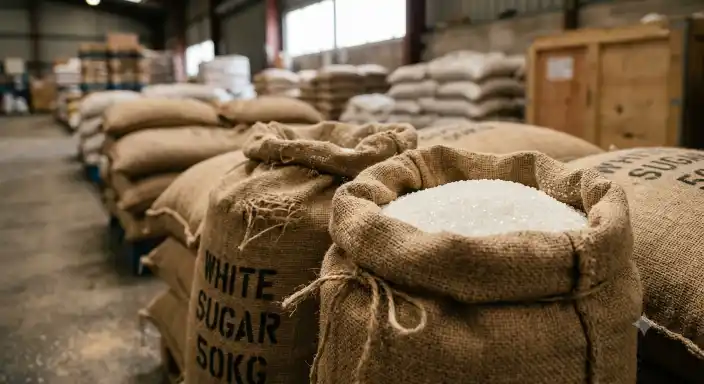
The rise has raised concerns about the availability of sugar during the festive season, when demand typically increases as sweet shops and households prepare for celebrations. Industry experts have said that existing supply measures have not provided lasting relief, while restrictions on stocks and trade have added pressure to the supply chain.
Centre Releases Additional Sugar Quota
In response, the Centre released 1.4 million tonnes of sugar for domestic sales between October 13 and October 31, bringing forward the allocation to support availability before Diwali. The government also allocated an additional 200,000 tonnes to sugar importers. Ex-mill prices had risen by nearly ₹1,000 per quintal over the preceding 10 days.
Maharashtra received 476,000 tonnes of the domestic quota, followed by Uttar Pradesh with 451,000 tonnes and Karnataka with 232,000 tonnes. Together, the three states accounted for about 83% of the allocation to domestic sugar mills.
Stock Limits Tightened to Curb Hoarding
The government has also tightened stockholding rules for sugar dealers. From October 15 to November 30, dealers will be allowed to hold a maximum of 1,000 quintals and cannot retain stocks for more than 15 days after receipt. The restrictions are intended to discourage hoarding and ensure sugar moves through the distribution chain to consumers.
Earlier measures included allowing duty-free imports of one million tonnes of raw sugar and imposing restrictions on bulk consumers’ purchases from the domestic open market. However, concerns remain over whether supplies can increase quickly enough to meet the festive demand peak.
Delayed Sugarcane Crushing Adds to Supply Concerns
The start of the 2026–27 sugarcane crushing season has emerged as another concern. An expected early start at some mills in Maharashtra and Karnataka has been complicated by a shortage of harvest-ready cane. Farmers have also sought higher cane prices and an increase in the minimum selling price of sugar from ₹31 to ₹50 per kg.
Large-scale crushing may not begin until November, leaving the market more dependent on existing stocks and imported sugar in the near term. The pace of fresh production, along with the impact of the Centre’s quota and stock-control measures, will be important in determining how prices move as Diwali approaches.
