


Indian Railways is planning to expand its Vande Bharat sleeper train programme with a new 24-coach configuration designed for long-distance overnight journeys. The Integral Coach Factory (ICF) in Chennai has been assigned the task of manufacturing 50 such trainsets, with the rollout targeted for the first half of 2027 and June set as the proposed deadline.
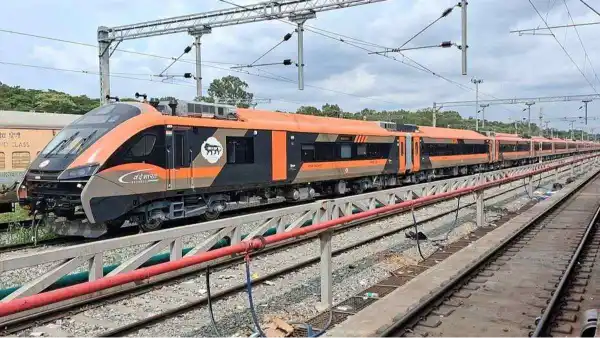
The proposed 24-coach version will build on the existing Vande Bharat sleeper design, which has a 16-coach configuration. The longer train is expected to offer greater passenger capacity and additional onboard facilities for overnight travel.
A key addition will be a dedicated pantry car, along with more toilets and upgraded interiors. Other planned amenities include individual reading lights, charging points, refreshment tables, automatic doors and improved passenger safety systems.
The sleeper trains are designed for a maximum operating speed of 160 kmph, with testing speeds of up to 180 kmph. Actual operating speeds will depend on track conditions and the infrastructure available on individual routes. Safety features include the indigenous KAVACH anti-collision system, CCTV cameras and emergency communication facilities.
The expansion is part of Indian Railways’ wider plan to introduce more than 200 Vande Bharat sleeper trainsets over the coming years. Three major manufacturing programmes are underway: BEML, with support from ICF, is producing 10 trainsets; the Indo-Russian joint venture Kinet has been assigned 120; and a consortium of Titagarh Rail Systems and Bharat Heavy Electricals Limited (BHEL) is expected to manufacture another 80.
The new sleeper trains are expected to compete with established premium overnight services such as the Rajdhani Express by offering modern interiors, improved berth comfort and enhanced onboard amenities. The expansion also reflects Indian Railways’ efforts to modernise long-distance travel and increase capacity on routes with strong overnight passenger demand.
With manufacturing planned at ICF Chennai, the programme will also support domestic railway production. The final deployment schedule and routes for the 24-coach trains are yet to be announced.
