


The historic Gandhi Museum in Madurai has reopened after a ₹10.25 crore renovation that combines its traditional character with modern digital facilities.
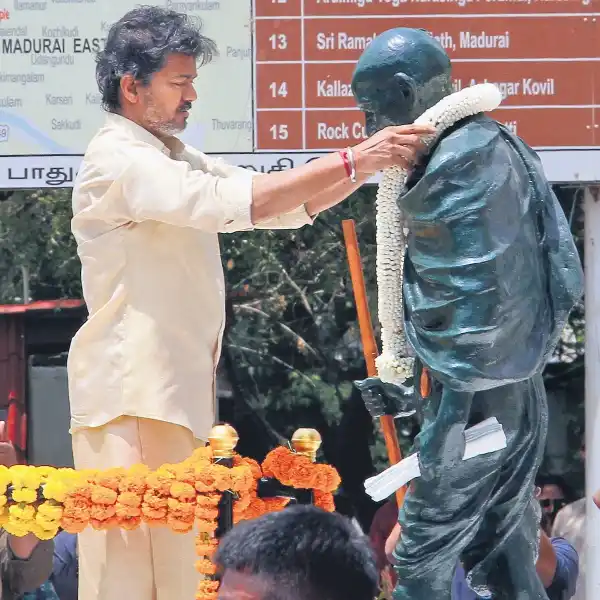
During the inauguration on Monday, Chief Minister C Joseph Vijay paid tribute to Mahatma Gandhi by garlanding his statue at the memorial complex. The renovated museum now features digital displays along with modern light and sound systems to help visitors understand the history and importance of the exhibits.
A Palace With Centuries of History
The museum complex has a history dating back to the 17th century. The central portion of the building originally served as a palace for Rani Mangammal, the queen regent of the Madurai Nayak kingdom.
Over the years, different rulers added structures to the complex. In 1955, the property was handed over to the All India Gandhi Smarak Nidhi to establish a museum dedicated to Mahatma Gandhi.
The museum was formally opened in April 1959 by then Prime Minister Jawaharlal Nehru.
Gandhi’s Connection With Madurai
Although Gandhi never stayed in the building that later became the museum, Madurai had an important place in his life.
During one of his visits to the city in 1921, Gandhi decided to adopt the iconic loincloth as his everyday working attire. During that visit, he stayed at the residence of Ramji and Kalyanji on West Masi Street.
Rare Gandhi Memorabilia
After the palace complex was handed over to the Gandhi Smarak Nidhi, its famous library was opened in 1955. The museum later became home to a rare collection of objects connected to Gandhi.
One of the most significant exhibits is the blood-stained cloth Gandhi was wearing when he was assassinated in 1948. The collection also includes his personal belongings, such as his spectacles, leather sandals and a wooden spinning wheel.
The museum also preserves several letters written by Gandhi. These include a letter addressed to Adolf Hitler beginning with the words ‘Dear Friend’, a congratulatory message to Subramania Bharati and a personal letter to Shri Narayana Satsangi of Devakottai.
Traditional Restoration With Modern Facilities
The renovation has focused on preserving the antique character of the historic building while making it more accessible and engaging for visitors.
Traditional construction materials such as limestone, jaggery, ink nut (Terminalia chebula), small bricks and river sand were used during the restoration to retain the building’s original character.
The museum now has digital displays and modern light and sound systems that provide visitors with information about the historical significance of the exhibits.
Better Facilities for Visitors
The renovated complex also includes several improvements for visitors. A lift has been installed, while the previously damaged Kumarappa Kudil has been restored with a zinc roof and new grills.
The facility has also been made more visitor-friendly with new restrooms, railings along sloped pathways and traditional Kota stone flooring.
The renovation brings together Madurai’s architectural heritage, Gandhi’s legacy and modern museum technology, giving visitors a more accessible way to explore the history and collections of the Gandhi Museum.
