


Union Minister for Road Transport and Highways Nitin Gadkari has highlighted India’s push towards cleaner transportation, including hydrogen vehicles, electric mobility, alternative fuels and greener public transport.
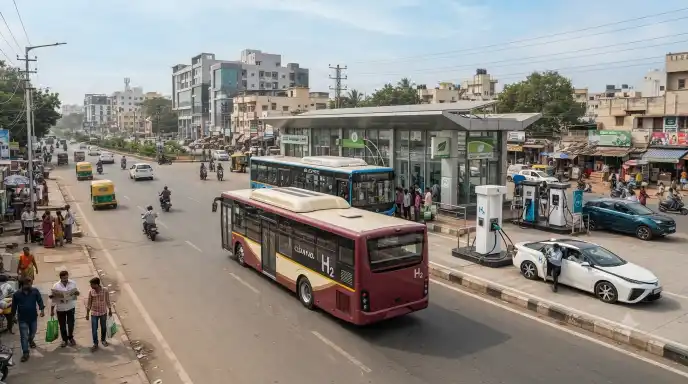
Speaking about hydrogen technology, Gadkari said he personally travels in a hydrogen-powered Toyota Mirai, describing the vehicle as an example of the future of clean mobility. He also said hydrogen-powered buses are being planned for 10 routes as India expands trials of hydrogen-based transport.
Hydrogen and electric mobility
Gadkari said the government is promoting both hydrogen and electric vehicles as part of efforts to reduce pollution and dependence on imported fuels.
India is already conducting hydrogen vehicle pilot projects on 10 routes across the country, covering routes such as Thiruvananthapuram–Kochi, Pune–Mumbai, Ahmedabad–Vadodara–Surat and Greater Noida–Delhi–Agra. The projects include hydrogen-powered buses and trucks along with supporting refuelling infrastructure.
Push for more electric buses
Gadkari also highlighted the PM-eBus Sewa programme, which provides for 10,000 electric buses across cities under a public-private partnership model.
The scheme has an estimated cost of ₹57,613 crore and is expected to generate around 45,000 to 55,000 direct jobs. As of early 2026, all 10,000 buses under the scheme had been sanctioned across 116 cities in 20 states and six Union Territories.
The programme is aimed at improving city bus services while supporting electric mobility and reducing emissions from public transport.
Waste-to-CNG projects
Gadkari also spoke about converting waste into fuel. He cited Nagpur’s waste-to-CNG production and said similar projects could provide additional income opportunities for farmers while helping reduce fuel imports and pollution.
The government is also continuing its vehicle scrappage programme and working to expand vehicle scrapping and testing centres.
Focus on safer and accessible buses
The minister said public transport should be affordable and accessible, particularly for poorer sections of society.
He also highlighted plans to improve bus safety and make buses more accessible for senior citizens and persons with disabilities, including easier boarding arrangements.
More driver training
Gadkari said 32 driving centres had been established in Madhya Pradesh to address the shortage of trained drivers.
He linked the expansion of driver training with the wider need for skilled workers as India’s automobile and transport sectors continue to grow.
Expanding employment opportunities
Gadkari also discussed the use of private vehicles as taxis and its potential to create employment opportunities for drivers.
He said wider adoption of such measures could provide additional livelihood opportunities while expanding mobility services across the country.
Overall, Gadkari’s remarks covered a range of measures, from hydrogen and electric vehicles to waste-based fuels, vehicle scrappage, driver training and public transport, as India works towards cleaner and more accessible mobility.
