


India could achieve its ₹50,000 crore defence export target by 2028, nearly two years ahead of the government’s current 2029-30 target, Defence Secretary Rajesh Kumar Singh said at a Public Affairs Forum of India conference.
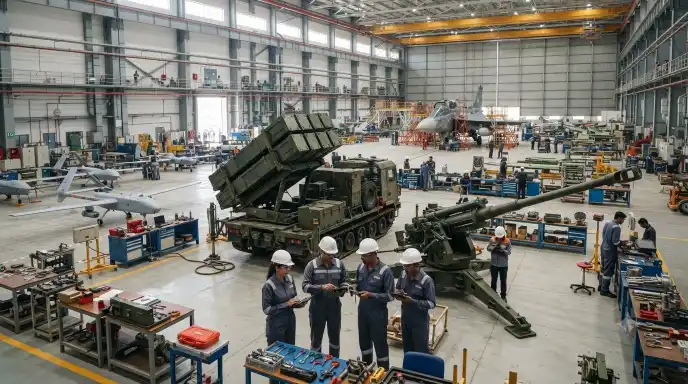
Singh said defence export orders had recently reached around ₹38,000 crore and that rising international demand for Indian-made missiles, artillery systems and other military equipment could help the country reach the target earlier.
Defence exports reach record level
India’s defence exports reached a record ₹38,424 crore in 2025-26, according to government data. This was a sharp increase from ₹686 crore in 2013-14. Government data also shows that Indian defence products are now being exported to more than 80 countries.
The government has set a target of ₹50,000 crore in annual defence exports by 2029-30. Defence Minister Rajnath Singh has also said the target could be achieved ahead of schedule.
Cost advantage in missile exports
According to Rajesh Kumar Singh, cost competitiveness could become an important factor in expanding India’s defence exports.
He said Indian missile systems could be offered at significantly lower prices than comparable systems from foreign original equipment manufacturers. This could create greater opportunities for Indian defence companies in overseas markets.
India is also expanding its export basket beyond established products such as the BrahMos supersonic cruise missile. Singh said there was growing interest in Indian artillery and mounted gun systems, while the Akash surface-to-air missile system has also attracted interest from potential buyers.
More manufacturers planned
The Defence Secretary said India needs to expand its domestic manufacturing base across several defence segments.
He said the country should have at least two or three fighter aircraft production lines, around half a dozen missile manufacturers and hundreds of drone makers.
The government is also opening ammunition and propellant production to more private-sector companies, with the aim of reducing dependence on a single public-sector manufacturer.
Defence exports and long-term partnerships
Singh said defence exports can create longer-term relationships with buyer countries because military equipment requires continued supplies of spare parts, maintenance and technical support.
He also highlighted the potential benefits for foreign exchange earnings and employment while helping Indian defence manufacturers build an international presence.
Focus on larger defence platforms
India’s growing defence manufacturing ecosystem is also expected to support the development of larger and more advanced platforms.
Singh pointed to the Advanced Medium Combat Aircraft (AMCA) programme, for which proposals are being considered from three shortlisted companies.
India’s defence production reached a record ₹1.78 lakh crore in 2025-26, with the private sector accounting for about 24% of total production, according to government data.
With defence exports already at a record level, the government is now looking to expand production capacity, increase the number of domestic manufacturers and grow India’s presence in international defence markets.
