


Tesla has started deliveries of its Semi electric trucks to a first group of customers, nearly nine years after CEO Elon Musk unveiled the vehicle. The deliveries began at Tesla’s dedicated Semi factory in Sparks, Nevada, marking a major step in the company’s move into the commercial trucking market.
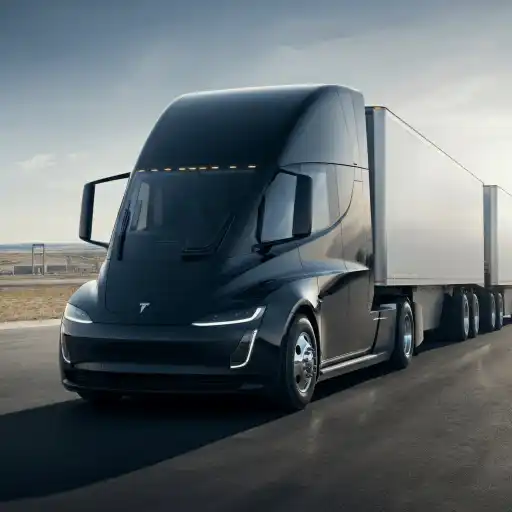
Designed for long-distance freight transport, the Tesla Semi expands the company’s electric vehicle business beyond passenger cars and SUVs. Customers including PepsiCo, DHL and US Foods were present at the factory event, with trucks carrying their logos displayed at the facility.
Tesla has not announced the pricing of the Semi or disclosed its current production volumes. However, the company has reiterated plans for its Nevada facility to eventually produce up to 50,000 Semi trucks a year. The dedicated factory began production earlier this year and was formally inaugurated in September.
The Semi will be offered in different configurations. The long-range version is designed to travel up to 500 miles on a single charge when loaded, while the standard version has a stated range of 325 miles. Tesla’s director of Semi truck engineering, Dan Priestley, said customers had validated the long-range truck’s real-world performance.
The Semi was first unveiled in 2017, with production originally expected to begin in 2019. Tesla eventually started limited customer deliveries in late 2022, but the planned expansion of production faced several delays. The company has now moved toward higher-volume production at its new Nevada facility.
Demand for the electric truck has also grown. A coalition of major cargo-owning companies, including Microsoft and PepsiCo, recently placed an order for 2,500 electric Class 8 trucks through the ZET SCALE programme, with Tesla named as the primary supplier. Swedish freight technology company Einride has also ordered 500 Tesla Semis.
The latest deliveries come as Tesla seeks to expand electric trucking in the US, where heavy-duty freight remains dominated by diesel-powered vehicles. The company is also preparing to expand the Semi into Europe, where it plans to compete in the growing electric heavy-truck market.
With customer deliveries now underway and the Nevada factory targeting annual capacity of 50,000 trucks, the Semi represents a new commercial vehicle business for Tesla after years of development and production delays.
