


The central government is stepping up efforts to move more households from LPG cylinders to piped natural gas, or PNG. The petroleum ministry has identified more than 41 lakh households that could be shifted to PNG, especially in areas where pipeline networks are already available.
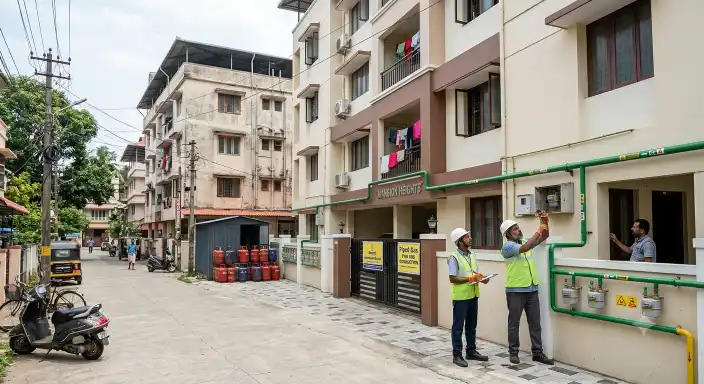
The immediate focus is on around 21 lakh households that already have access to PNG networks and another 20 lakh consumers who have registered for a PNG connection.
Faster PNG Connections
The petroleum ministry has asked city gas distribution companies to speed up last-mile pipeline connections and encourage eligible LPG consumers to make the switch.
The government has already carried out a large awareness campaign. More than 21 lakh households received WhatsApp messages, around eight lakh were given physical notices and over 33,000 camps were organised to promote PNG.
Despite these efforts, only slightly more than 1.4 lakh households surrendered their LPG connections in the past five months.
West Asia Conflict Adds Urgency
The move gained importance during March and April when the conflict in West Asia affected supplies through the Strait of Hormuz and put pressure on LPG availability.
India used around 33 million tonnes of LPG in 2025-26. Domestic production was only about 13 million tonnes, with the remaining supply coming mainly through imports from West Asia.
The government believes greater use of PNG could help reduce dependence on imported LPG and improve energy security.
PNG Connections Still Below Target
According to data from the Petroleum and Natural Gas Regulatory Board, India had around 1.74 crore domestic PNG connections by June 2026.
The target for the period was 4.41 crore connections, meaning only about 39% of the target had been achieved. Around 1.5 lakh new PNG connections were added in June alone.
Delhi recorded the highest number of new connections during the month, followed by Ahmedabad and Daskroi in Gujarat and Vadodara.
Around 72,000 housing societies are located in 311 geographical areas where PNG networks are available through oil companies and city gas distribution companies.
LPG Costs Put More Pressure on Government
The push toward PNG also comes as the cost of supplying domestic LPG remains high.
The cost of supplying a 14.2-kg LPG cylinder crossed ₹1,600 in June 2026. However, public sector oil companies sold the cylinder for ₹942 to general consumers in Delhi and at an effective price of ₹642 for beneficiaries of the PM Ujjwala scheme.
The gap between the supply cost and retail price has resulted in large losses for public sector oil marketing companies. Their combined under-recoveries from domestic LPG sales crossed ₹59,000 crore by the end of July.
New Incentives From September
The government is also planning to identify households that have both LPG and PNG connections through a de-duplication exercise.
Petroleum Secretary Neeraj Mittal has asked state and Union Territory chief secretaries to provide administrative support and appoint nodal officers to help speed up the PNG expansion.
From September 1, eligible city gas distribution companies will receive an additional incentive in the form of 200 standard cubic metres of lower-priced domestic APM gas for every new domestic PNG connection above the prescribed target in a geographical area.
The government hopes these measures will increase PNG adoption, improve energy security and reduce the country’s dependence on imported LPG.
