


The fertiliser ministry has introduced a new digital system to monitor fertiliser supplies across India in real time. The system tracks fertiliser dispatches, transportation and stocks from national warehouses to retail shops.
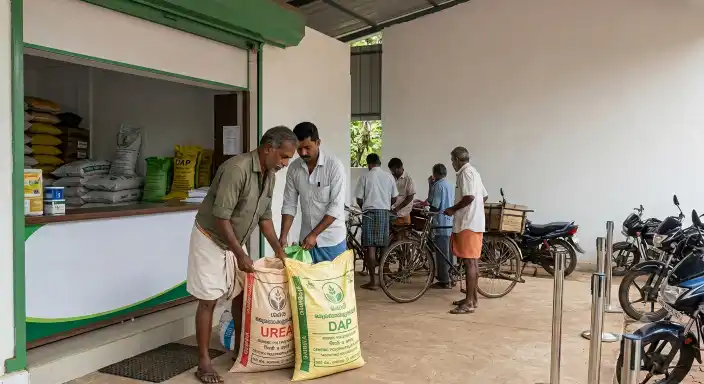
The main aim is to prevent sudden shortages that can force farmers to wait in long queues to buy fertiliser.
Real Time Fertiliser Tracking
The new analytical tool and national-to-retail dashboard can identify possible shortages and unusual buying patterns at an early stage.
Officials said this will help the government take quick action when supplies begin to fall in a particular area.
The system is being closely monitored by the government and has been designed to prevent a repeat of sudden fertiliser shortages seen in the past.
Linked With National Fertiliser System
The new system works closely with the government’s Integrated Fertiliser Management System (iFMS).
The iFMS connects more than 140 million Aadhaar-linked fertiliser buyers and over 250,000 retail outlets across the country. Around 70 million tonnes of fertiliser transactions are processed through the system every year.
The digital system also supports the transparent distribution of nearly ₹3 trillion in annual fertiliser subsidies.
Fertiliser Data Linked With Farmer Records
The fertiliser ministry’s digital system has now been connected with Haryana’s Meri Fasal Mera Byora portal and the Agriculture Ministry’s national AgriStack databases.
AgriStack is being developed as a digital database of Indian farmers. A key part of the programme is the creation of Farmer IDs, which are being developed by state governments.
As of August 15, 2026, around 61% of India’s sown area had been linked to Farmer IDs.
However, several states still have low coverage. Around 17 states, including Bihar, Jharkhand, Punjab, Haryana, Assam, Kerala, Odisha and West Bengal, had less than one-third of their sown area linked to Farmer IDs.
Checking Fertiliser Demand
Officials said linking Farmer IDs with fertiliser purchases could help the government understand actual demand more accurately.
Fertiliser purchases could gradually be checked against land ownership and crop information. This could help identify unusual consumption and improve supply planning.
Farmers may also be able to book fertiliser through mobile applications. QR codes generated through the system can then be checked at point-of-sale machines when the fertiliser is collected.
Reducing Leakage and Pilferage
The government believes the digital system could also help reduce fertiliser pilferage and leakage.
Urea consumption crossed 40 million tonnes in FY26, reaching record levels. Officials have linked part of the unusually high consumption to possible leakage and misuse.
Government data showed that in 2024-25, around 65% of farmers purchased five to seven bags of urea during the year, a level considered reasonable. The remaining 35% of farmers accounted for the largest share of urea consumption.
Around 163 of India’s 730 districts were identified as areas with high fertiliser usage.
Fertiliser Subsidy Under Pressure
India’s fertiliser subsidy has also increased because of higher consumption and rising import prices.
In FY26, the fertiliser subsidy reached ₹1.86 trillion, around 11% higher than the Budget estimate of ₹1.67 trillion.
Officials expect actual spending on fertiliser subsidies in FY26 to cross ₹2 trillion.
For FY27, the revised subsidy estimate could also be much higher than the Budget allocation of ₹1.70 trillion, partly because of the impact of the West Asia conflict and higher domestic fertiliser consumption.
The new digital tracking system is therefore aimed not only at preventing shortages but also at improving distribution, reducing leakages and helping the government manage fertiliser demand and subsidy costs more effectively.
