


India has achieved a major breakthrough in fresh fruit exports with the successful sea shipment of 12.5 tonnes of Dashehari and Langra mangoes from Amroha, Uttar Pradesh, to Dubai. The export marks the success of a new sea-based mango export protocol developed by ICAR–Central Institute for Subtropical Horticulture (ICAR-CISH) and the Agricultural and Processed Food Products Export Development Authority (APEDA).
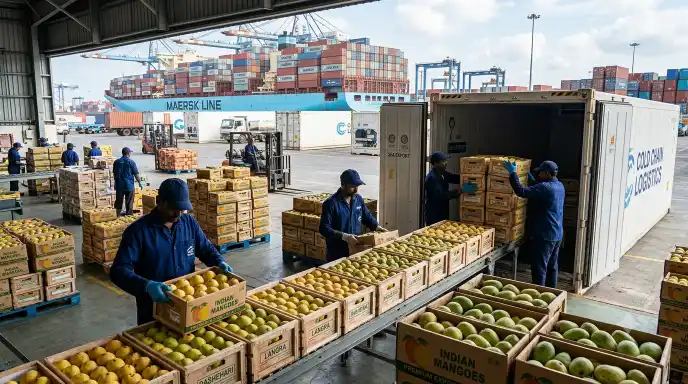
The consignment was exported in a 40-foot refrigerated container by Shehnaz Export, Amroha, in partnership with Attashi Global, and was delivered to Lulu Group, a leading retail chain in the Gulf region. The shipment was supported with technical expertise from ICAR-CISH and logistics assistance from APEDA.
The mangoes were harvested on June 22 and processed using advanced post-harvest management methods. Before shipment, the fruits underwent treatment with METWASH, a shelf-life enhancement technology developed by ICAR-CISH. They were then scientifically graded, packed at the Amroha Pack House and transported through a continuous cold-chain system.
Despite delays caused by weather conditions linked to a Western Disturbance, the mangoes reached Dubai on July 17, completing a 25-day journey from harvest to market. Nearly 90% of the fruits remained in marketable condition, proving the effectiveness of the newly developed sea export method.
The Ministry of Agriculture and Farmers Welfare said the successful trial shows that premium Indian mango varieties can be transported by sea while maintaining quality, offering a more cost-effective alternative to air freight.
The lower transportation costs also benefited farmers, with exporters able to provide growers an additional ₹15–20 per kilogram compared with traditional export channels. This has helped improve farmer returns while making Indian mangoes more competitive in international markets.
The shipment is the first successful commercial sea export of Dashehari and Langra mangoes from Uttar Pradesh to Dubai using an extended transit period. The achievement opens new opportunities for expanding sea-based mango exports to Gulf countries and other global markets.
The government expects this export model to encourage more mango producers and exporters to adopt sea freight, helping reduce costs, increase export volumes, improve foreign earnings and create better income opportunities for farmers across major mango-growing regions in India.
