


After completing his studies, Sonam Wangchuk decided to work towards improving the education system that had struggled to support many students like him. In 1988, he co-founded the Students’ Educational and Cultural Movement of Ladakh (SECMOL), an organisation focused on practical, student-focused learning methods.
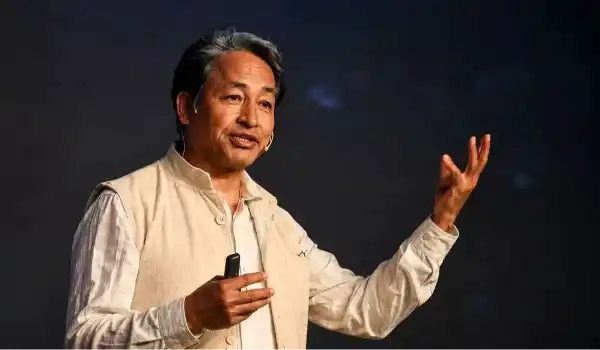
Wangchuk later played a key role in launching Operation New Hope, an initiative that brought together teachers, local communities and the government to improve the quality of education in Ladakh’s government schools. The programme aimed to make education more meaningful and connected to the needs of local students.
Beyond education, Wangchuk is also known for his innovative solutions to environmental challenges. His most recognised invention, the Ice Stupa, creates artificial glaciers by storing frozen water during winter and releasing it during spring to support farmers with irrigation. The innovation has gained global attention for its approach to water conservation.
He has also worked on several other sustainable technologies, including solutions related to passive solar heating, eco-friendly buildings and water management, designed to address challenges in the Himalayan region.
Over the years, Wangchuk has received several prestigious awards for his contributions to education and sustainability, including the Ramon Magsaysay Award in 2018 and the Rolex Award for Enterprise in 2016.
Through SECMOL, climate innovations and his advocacy for education reforms, Wangchuk has continued to promote a learning system that encourages creativity, critical thinking and practical skills instead of only focusing on memorisation. After ending his 26-day fast, he has continued to push for meaningful action on issues affecting students and education.
