


As global energy markets remain uncertain due to geopolitical tensions and rising fuel concerns, India is exploring unconventional ways to reduce dependence on imported oil. One such solution is gaining attention in Gujarat, where cattle waste is being converted into vehicle fuel.
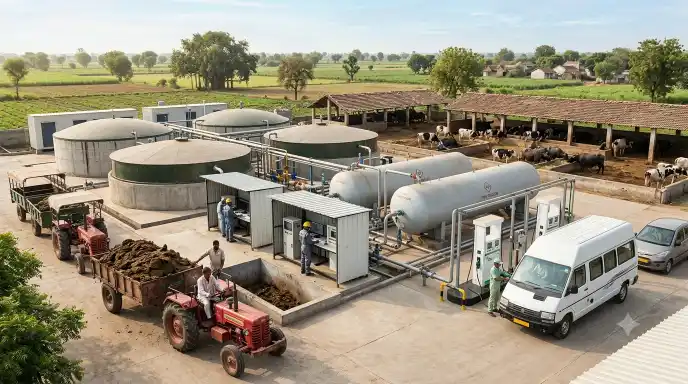
A bio-CNG station in Banaskantha, supported by Suzuki Motor Corp. and Banas Dairy, is producing compressed natural gas from methane extracted from cattle waste. The fuel is sold at around ₹80 per kg and is being used by hundreds of vehicles every day.
The plant collects nearly 88 tonnes of cattle waste daily from 16 villages. Farmers supplying the waste earn additional income by selling cow dung at around ₹1 per kg, creating a new revenue stream for rural households.
The process works by extracting methane from cattle waste through anaerobic digestion. The captured gas is purified and converted into biological compressed natural gas, which can be used as a transport fuel. The remaining organic slurry is converted into fertiliser and supplied to farmers, creating a circular economy model.
The initiative combines Banas Dairy’s rural collection network with Suzuki’s investment and automotive expertise. Farmers like Bhemjibhai Nathubhai from Bukhala village are benefiting from the model by earning extra income from cattle waste while also using locally produced bio-CNG for their own vehicles.
India has been promoting compressed biogas as part of its broader energy security strategy. The country is already producing bio-CNG from sources such as municipal waste, agricultural residue and other biomass materials.
Large companies including Reliance Industries and Adani Group are also exploring investments in biogas production, as demand grows for cleaner alternatives to traditional fuels.
However, scaling up bio-CNG production remains challenging. India’s current output is still small compared with overall natural gas demand. Collection of cattle waste, transportation costs, limited infrastructure and high initial investment requirements continue to slow expansion.
Despite these challenges, projects like the Banaskantha bio-CNG plant demonstrate how agricultural waste can become a valuable energy resource. By linking farmers, renewable fuel production and sustainable farming, cow dung-based fuel could become one part of India’s larger effort to build a cleaner and more self-reliant energy system.
