


A satirical online movement called the Cockroach Janta Party has gone viral across social media, quickly turning into a major digital talking point before its X account was withheld in India.
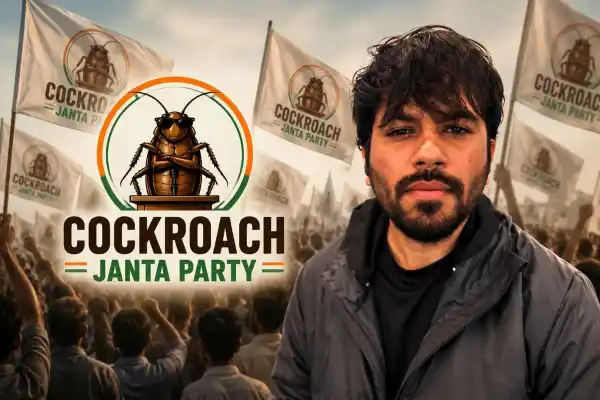
The group, which began as a meme-style political joke, reportedly gained over 100,000 members within just a few days of launching and went on to attract millions of followers across platforms. Its rise was linked to online backlash over controversial remarks attributed to Chief Justice Surya Kant, who was said to have compared unemployed youth to “cockroaches,” a claim that triggered widespread reactions on social media.
Despite starting as satire, the movement rapidly grew into a large online community, with its Instagram presence reportedly surpassing several mainstream political accounts in follower count, including that of the Bharatiya Janata Party. At its peak, the CJP claimed over 15 million followers online, according to circulating reports.
The X account of the group was later withheld in India, after which a new handle was created to continue engagement with followers.
Who is Abhijeet Dipke?
The Cockroach Janta Party was founded by Abhijeet Dipke, a 30-year-old political communication strategist with experience in digital campaign strategy and online political messaging.
Dipke completed his undergraduate studies in journalism in Pune before pursuing higher education in the United States. He later earned a master’s degree in Public Relations from Boston University.
Between 2020 and 2023, he worked with the Aam Aadmi Party, where he was involved in social media operations and digital campaigning. During the 2020 Delhi Assembly elections, he contributed to meme-based and online content strategies for the party.
In interviews, Dipke has said the project was not pre-planned, describing it as an organic response to widespread frustration among young people, particularly around unemployment and limited workforce opportunities. He is currently based in the United States.
He has also stated that India’s large youth population, many of whom are struggling to find stable employment, played a key role in the movement gaining traction online.
Controversy and past allegations
Reports have also surfaced about a past complaint filed in 2019 against Dipke, alleging the spread of provocative content related to Kashmir. The complaint, reportedly submitted by a voluntary organisation, accused him of sharing misleading and inflammatory posts on social media. These claims remain part of public records and online discussions surrounding him.
Growing digital phenomenon
What began as a satirical idea has now evolved into a wider conversation about unemployment, youth frustration, and the power of meme-driven political expression in India’s digital space.
