


DP World’s International Container Transshipment Terminal at Vallarpadam in Cochin recorded a significant decline in transshipment volumes during FY 2025–26, as competition intensified from Kerala’s emerging deepwater port ecosystem.
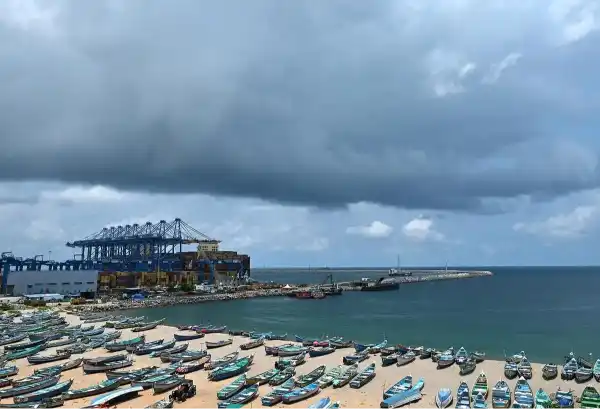
The terminal handled a total of 767,948 TEU during the year. However, its core transshipment activity nearly halved, falling to 85,912 TEU from 169,562 TEU in the previous fiscal. This reduced transshipment’s share of overall throughput to around 11%, indicating a clear shift in cargo flows.
Overall throughput also declined compared to the previous year’s 834,665 TEU, reflecting broader pressure on the terminal’s traditional role as a transshipment hub.
Changing Cargo Mix
The volume breakdown for FY 2025–26 included 330,909 TEU of coastal export-import cargo, 32,618 TEU of coastal transshipment, 351,127 TEU of foreign export-import cargo, and 53,294 TEU of foreign transshipment.
Rising Competition from Vizhinjam
The competitive pressure has increased with the rapid scaling of Vizhinjam International Seaport, operated by Adani Ports and Special Economic Zone. The port handled about 1.3 million TEU in its first year of operations and crossed the 1 million TEU mark while servicing over 40 ultra-large container vessels.
With an 18-metre natural draft expandable to 20 metres, Vizhinjam is designed for large container ships, giving it a structural advantage in attracting transshipment traffic.
From Record Year to Decline
The latest decline comes after a strong previous year for DP World Cochin, when throughput reached a record 834,665 TEU and transshipment volumes peaked following capacity upgrades that raised handling capability to around 1.4 million TEU.
Despite maintaining its strategic location along major East–West shipping routes, recent data shows increasing cargo diversion toward newer deepwater infrastructure along the coast.
