


The United States has signaled that a possible route still exists for India to consider acquiring the F-35 fifth-generation stealth fighter. The indication came during a high-level meeting at the Pentagon on April 9, 2026, where Mike Duffey, U.S. Under Secretary of Defense for Acquisition and Sustainment, met Indian Foreign Secretary Vikram Misri during his official visit to Washington.
The discussions were described as productive and reflect the steady expansion of defence cooperation between the two countries, especially in advanced military technologies. While Duffey’s remark does not amount to a formal proposal, it is seen as a diplomatic signal that Washington is not ruling out the option as strategic ties deepen.
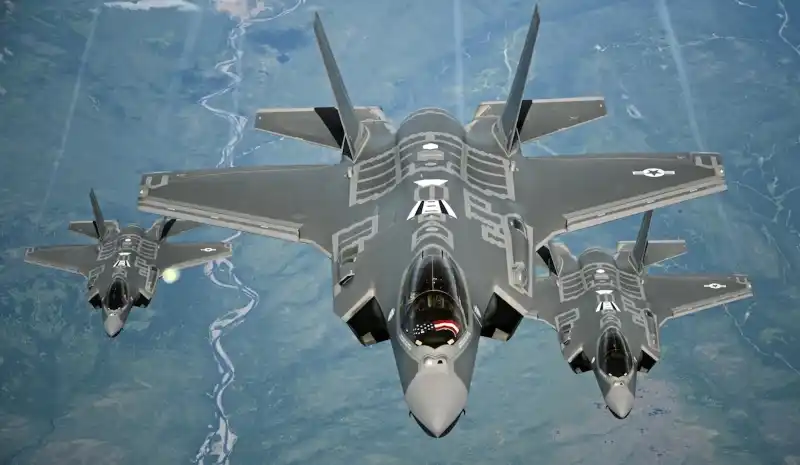
The F-35 Lightning II, developed by Lockheed Martin, is the backbone of U.S. fifth-generation airpower, known for its stealth design, sensor fusion, and networked combat capabilities. For India, which is working on its indigenous Advanced Medium Combat Aircraft (AMCA) while also dealing with fighter squadron shortages, the platform represents a potential option in long-term force planning.
That said, any move toward the F-35 would come with significant strategic and technical challenges. India’s defence procurement approach has traditionally been diversified, with an emphasis on strategic autonomy. Operating a platform like the F-35 would involve strict conditions around data access, software control, and integration with existing fleets, including systems of Russian origin.
The timing also aligns with growing India–U.S. defence engagement under frameworks such as the Quad and Indo-Pacific security partnerships. Increased joint exercises and interoperability efforts have already brought the two militaries closer, and a platform like the F-35 would mark a deeper level of alignment if ever pursued.
At the same time, India’s indigenous AMCA program remains central to its long-term airpower goals. Designed as a fifth-generation fighter with stealth and advanced avionics, it is still under development and years away from full deployment. In that context, the F-35 is being viewed in some discussions as either a possible interim capability or a parallel option, depending on future policy decisions.
