


The ongoing conflict in Iran is creating turbulence in India’s $5 billion packaged water industry just as the summer season approaches. Manufacturers are facing higher costs for everything from plastic bottles to caps, labels, and cardboard boxes, prompting some to raise prices for distributors.
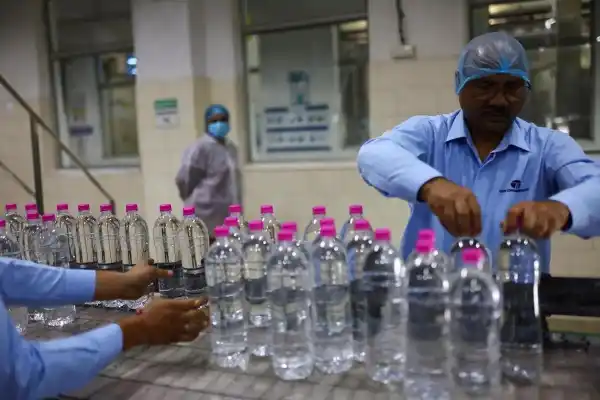
While large brands have so far absorbed most of the extra costs, around 2,000 smaller bottled water producers have increased rates for resellers by about 1 rupee per litre—a 5% rise—with a further 10% hike expected in the coming days, according to the Federation of All India Packaged Drinking Water Manufacturers’ Association. Currently, consumers typically pay under 20 rupees (roughly 20 cents) for a one-litre bottle.
Apurva Doshi, the federation’s secretary general, warned that retail prices could start rising within the next few days. The surge is largely driven by rising oil prices, which have increased the cost of polymer, the main material for plastic bottles. Prices for bottle-making materials have jumped 50% to 170 rupees per kilogram, caps have more than doubled to 0.45 rupees each, and packaging items such as corrugated boxes, labels, and adhesive tape have also become significantly more expensive.
Clean water is critical in India, where 70% of groundwater is reportedly contaminated, making bottled water essential for millions. Major players in the market include Bisleri, Coca-Cola’s Kinley, Pepsi’s Aquafina, Reliance, and Tata, all competing for a share of the $5 billion industry.
Even the premium water segment, a $400 million market catering to wealthier consumers, is feeling the pressure. Premium brands such as Aava, which sources water from the Aravalli foothills, have raised reseller prices by 18%, according to CEO Shiroy Mehta. While many companies are absorbing 40–50% of the cost increases to retain clients, the overall situation poses a challenge for the beverage industry heading into peak summer demand.
In the mass market, companies producing standard 1-litre bottled drinking water have issued notices highlighting “unprecedented and continuous” raw material cost surges, warning that it is no longer possible to maintain existing prices without passing on the increases.
