


On February 6, 2026, the Supreme Court partially allowed a woman’s appeal over a bad haircut case, awarding her ₹25 lakh instead of the ₹5.2 crore she had sought. The court noted that while she claimed the haircut hurt her confidence, impacted her modelling opportunities, and caused depression, the evidence she provided did not justify such a high compensation. The Court emphasized that claims must be backed by reliable proof of actual loss, not assumptions.
Background:
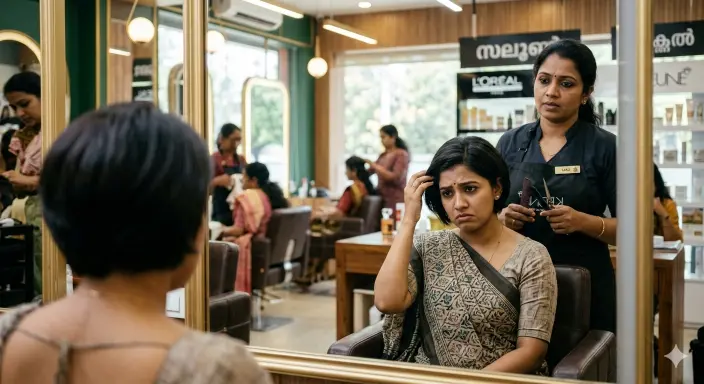
The incident occurred on April 12, 2018, when the woman went to a five-star hotel salon for a haircut, which she alleged was cut too short. She filed a complaint with the Consumer Commission in July 2018. In September 2021, the Commission found the salon guilty of service deficiency and medical negligence, awarding her ₹2 crore in compensation. The hotel appealed, and the Supreme Court remanded the case to reassess the amount.
After the remand, she increased her claim to ₹5.2 crore, presenting documents to support her case. The Consumer Commission again awarded ₹2 crore plus 9% interest per year, prompting another appeal by the salon.
Her Arguments:
The woman, a management postgraduate from IIM Calcutta with a Diploma in Mass Communication, argued that her career prospects and confidence were severely affected. She claimed she had to leave her corporate job in June 2018 and faced lost opportunities in modelling. She also noted that the salon did not cross-examine her employers or agencies, which could have tested the validity of her documents.
The salon argued that her claim lacked proper evidence, such as income tax records showing her earnings before and after the incident. The woman represented herself in court and declined free legal aid.
Supreme Court Findings:
The Court observed that the documents submitted were mostly photocopies, with no witnesses called to verify them. The Supreme Court stressed that compensation, especially in crores of rupees, cannot be granted based on assumptions or unverified photocopies. Reliable evidence demonstrating actual financial or professional loss is essential.
The Court also noted that discrepancies in her documents undermined her claim. It concluded that the Consumer Commission erred in awarding ₹2 crore, as there was no solid proof justifying such a large sum.
Judgment:
The Supreme Court partially allowed the appeal, limiting the compensation to ₹25 lakh—the amount already deposited by the salon in court.
