


Despite rising pressure from global disruptions linked to the Iran conflict, the central government has chosen to keep domestic LPG prices unchanged, offering stability to households for now.
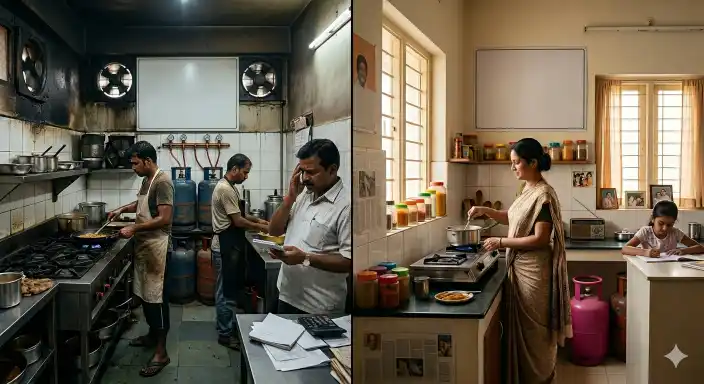
However, the story is different for commercial users. The price of a 19-kg commercial LPG cylinder has been sharply increased by an average of ₹993. In Delhi, the cost has jumped from ₹2,078.50 to ₹3,071.50, while in Mumbai it has risen from ₹2,031 to ₹3,024.
This marks the third hike since February 28, when tensions escalated due to the Iran war. The first increase came in March with a ₹144 rise, followed by another nearly ₹200 hike in early April. The repeated increases are placing significant strain on the hospitality sector, especially restaurants and small eateries that depend heavily on LPG for daily operations. Many are expected to pass on the higher costs to customers, which could make dining out and food delivery more expensive.
Domestic LPG prices across major cities remain unchanged for now. New Delhi stands at ₹913, Kolkata at ₹939, Mumbai at ₹912.50, Chennai at ₹928.50, Gurugram at ₹921.50, Noida at ₹910.50, Bengaluru at ₹915.50, Bhubaneswar and Kolkata at ₹939, Chandigarh at ₹922.50, Hyderabad at ₹965, Jaipur at ₹916.50, Lucknow at ₹950.50, and Patna at the highest level of ₹1,002.50.
Petrol and diesel prices have also been left unchanged, along with aviation turbine fuel for domestic airlines, providing some relief to consumers and the aviation sector.
At the same time, oil marketing companies continue to face heavy financial pressure due to high crude prices, reportedly above $120 per barrel. While fuel retail prices have remained stable, companies are said to be absorbing large losses, estimated in thousands of crores daily, as they continue selling at controlled rates.
Policy makers are balancing competing pressures. Increasing fuel prices would ease stress on oil companies but could also fuel inflation and slow economic growth. The government is already managing subsidy burdens on LPG and fertilisers, adding to the fiscal challenge.
So far, fuel price adjustments have been selective. Premium petrol, bulk diesel, and international aviation fuel rates have moved in line with global trends, while standard retail fuel prices remain unchanged.
In a parallel regulatory shift, new LPG booking rules will come into effect from May 1. Urban customers will now need to wait 25 days between bookings, up from 21 days, while rural users will face a 45-day interval. Bookings made earlier than the permitted window will be automatically blocked.
Additionally, delivery authentication is becoming stricter. An OTP-based system will replace manual verification methods, meaning customers must confirm deliveries through a code sent to their registered mobile numbers instead of relying on physical receipts or passbooks.
