


The trade agreement between India and the European Union, signed in January, has been called “the mother of all trade deals” by European Commission President Ursula von der Leyen, highlighting the significance of a partnership between the EU, the world’s largest trading bloc, and India, the world’s most populous country.
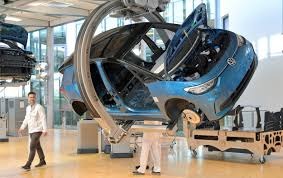
Tariff Reductions and Quotas for EU Cars
The deal will eliminate or reduce tariffs on 96.6% of EU exports to India, though sensitive agricultural products are excluded for both sides. Key products, such as cars, are included. India has agreed to grant European automakers quotas six times larger than previous limits, giving brands like Volkswagen, Mercedes-Benz, and BMW greater access to a market previously protected by high tariffs. Currently, India imposes levies between 70% and 110% on imported cars, limiting European penetration. Once ratified, 250,000 European cars could enter India annually at preferential rates, while vehicles outside the quota will face higher tariffs.
Benefits for Germany’s Automotive Sector
The deal is especially positive news for Germany’s struggling car industry, which faces competition from China, the shift to electric vehicles, and global trade challenges. The VDA, Germany’s automotive trade body, praised the agreement, with its president Hildegard Müller saying it “will bring about urgently needed improved market access in an increasingly protectionist global environment.” BMW also welcomed the deal, noting that it strengthens India as a key market and opens additional opportunities through lower tariffs.
Details on Tariff Cuts
Some details have emerged for European cars. India will cut tariffs on vehicles priced above €15,000 included in the annual quota to 40%, with a further reduction to 10% over time. Bloomberg reports that tariffs on 160,000 internal combustion engine cars per year will fall to 10% within five years, and 90,000 electric vehicles per year will reach 10% within ten years. Cars outside the quota may see tariffs reduced to 30–35% over a decade. High-end European cars priced above €35,000 are expected to benefit the most.
Opportunities and Challenges for German Brands
Experts see potential for German carmakers, particularly in the premium segment. Rico Luman, senior automotive economist at ING Bank, said the deal opens access to a market previously closed by tariffs reaching 110%. While a 40% tariff on out-of-quota cars remains a challenge, in-quota vehicles at 10% offer opportunities to expand offerings and export more luxury cars. Jan Noether, director general of the Indo-German Chamber of Commerce, emphasized that the deal strengthens the economic relationship and positions German automakers to benefit from India’s growing consumer base.
Competition and Market Realities
Despite optimism, German brands face stiff competition from local Indian automakers like Tata and Mahindra, as well as Japanese and South Korean players such as Hyundai and Suzuki. Currently, European cars account for less than 3% of sales. Analysts caution that by the time tariff reductions are fully implemented, electric vehicles may dominate, and Chinese manufacturers could have entered the market with local production.
Long-Term Prospects in India
A key goal for India is to attract German manufacturers to establish production units locally, leveraging lower costs and expanding their footprint. Volkswagen already produces Volkswagen, Skoda, and Audi models in India, while BMW assembles vehicles in Chennai to avoid high import tariffs. While India is not yet comparable to China in scale for German automakers, the growing middle class and demand for luxury vehicles present significant long-term opportunities. Experts see potential for brands like BMW, Mercedes-Benz, and Porsche to grow their presence, particularly in the premium segment, making the deal a bright spot amid global challenges.
