


Reports of Russia preparing to launch a nuclear-enabled satellite called Sputnik-S have raised concerns about the growing militarisation of space and the vulnerability of global satellite infrastructure.
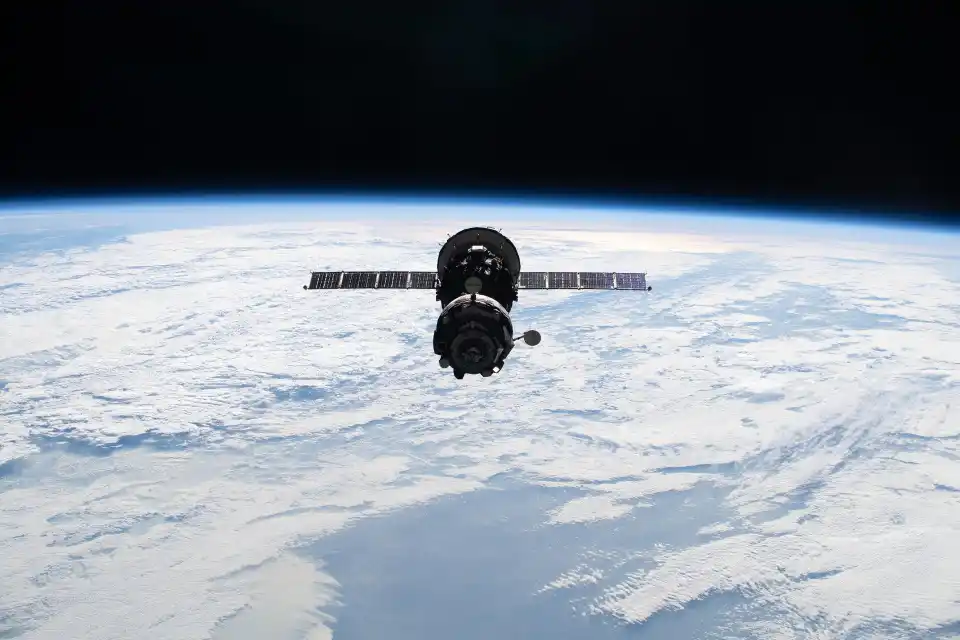
According to an investigation by German media organisations NDR, WDR and Süddeutsche Zeitung, Western intelligence assessments suggest that the satellite could be launched within 60 days and become operational soon afterwards. The reports say the satellite was assembled several years ago and is reportedly being stored in the Moscow region.
Germany has said it is taking the intelligence reports seriously. However, Russia has rejected the allegations. Kremlin spokesperson Dmitry Peskov dismissed the claims, while the Russian embassy described them as unfounded. No launch has been confirmed.
What Happens If a Nuclear Weapon Explodes in Space?
A nuclear explosion in space would be very different from one on Earth. Without an atmosphere, there would be no conventional mushroom cloud or the familiar blast wave associated with a ground-level nuclear explosion.
Instead, the explosion would release intense radiation, including X-rays and charged particles. Satellites within the radiation’s line of sight could suffer severe electronic damage or become completely inoperable.
The explosion could also release charged particles that become trapped in Earth’s magnetic field, creating an artificial radiation belt. Satellites passing through this region could experience repeated radiation exposure, gradually damaging their electronic components.
This could affect communication, navigation, weather monitoring, broadband connectivity and military satellite networks.
Starfish Prime: A Warning from 1962
The potential consequences are not entirely theoretical. In July 1962, the United States conducted a high-altitude nuclear test called Starfish Prime over the Pacific Ocean, at an altitude of approximately 250 miles.
The 1.4-megaton explosion created an artificial radiation belt around Earth. It also caused electrical disruptions in Hawaii, including the failure of around 300 streetlights, and damaged a microwave communications link.
Several satellites were disabled following the test. Communications satellite Telstar 1, launched shortly afterwards, also suffered radiation damage and stopped operating in February 1963.
A similar event today could have a much wider impact because the world now depends on thousands of satellites for everyday communication and essential services.
Study Warns of Widespread Satellite Damage
A research paper published on the arXiv preprint server on November 6, 2026, examined the possible impact of a nuclear explosion in low Earth orbit.
In one hypothetical scenario, researchers modelled a one-megaton nuclear detonation at an altitude of 500 kilometres above the South Atlantic. Their model estimated that approximately 98% of the satellites included in the scenario could be disabled within a week due to repeated radiation exposure.
The study also estimated that satellite failures could contribute to around 20 collisions over two years as damaged spacecraft lose their ability to manoeuvre and avoid other objects.
These are model-based estimates for a specific hypothetical scenario, not predictions of what would necessarily happen in an actual explosion.
Why Are Satellites in Low Earth Orbit Vulnerable?
Low Earth orbit, or LEO, hosts a large number of communication, broadband, weather and Earth-observation satellites. These spacecraft could face particularly high exposure to radiation from a nuclear explosion in orbit.
Satellite networks such as Starlink support internet connectivity across remote regions and are also used in critical operations. A widespread disruption could affect internet access, communications, navigation and emergency services.
Satellites in higher orbits, including those used for GPS navigation, may face different levels of exposure depending on the explosion’s altitude, radiation intensity and location. The extent of the damage would depend on several factors, including the weapon’s yield and the distribution of satellites.
International Treaties Prohibit Nuclear Weapons in Orbit
The 1967 Outer Space Treaty prohibits countries from placing nuclear weapons or other weapons of mass destruction in orbit around Earth or stationing them in outer space.
The 1963 Limited Test Ban Treaty also prohibits nuclear explosions in outer space.
If the reported Sputnik-S deployment involves placing a nuclear weapon in orbit, it would raise serious questions under these international agreements.
For now, Russia’s alleged launch preparations remain unconfirmed. However, the reports have renewed concerns about the security of space infrastructure that supports communication, navigation, scientific research and national security around the world.
