


Today, Bisleri is one of India’s most recognised packaged drinking water brands. Its green-labeled bottles are widely available across supermarkets, retail outlets, restaurants and travel hubs. However, the brand’s journey began in Italy, long before it became a familiar name in Indian households.
The story traces back to Italian entrepreneur and inventor Felice Bisleri, who developed products including mineral water and herbal health preparations in the 19th century. The brand eventually travelled to India, where it helped introduce bottled drinking water to a market that was largely unfamiliar with the concept.
The Italian Origins of Bisleri
Bisleri takes its name from Felice Bisleri. Its origins are associated with the Angelica spring in Nocera Umbra, an Italian town known for its mineral water.
After Felice Bisleri’s death in 1921, his family doctor and close associate, Dr Cesari Rossi, took over the business. Rossi later partnered with Indian businessman Khushroo Suntook to bring the brand to India.
Bisleri Enters India in 1965
Bisleri entered the Indian market in 1965, when Rossi and Suntook introduced bottled mineral water in Mumbai, then known as Bombay. A bottling facility was established in Thane.
At the time, packaged drinking water was largely considered a luxury. Most consumers were accustomed to accessing drinking water through taps, wells and other local sources. The initial market was therefore limited, with bottled water mainly catering to hotels, foreign visitors and affluent customers.
The concept struggled to gain wider acceptance, as many consumers questioned why they should pay for something that was freely available.
How the Parle Group Acquired Bisleri
In 1969, the Parle Group acquired Bisleri from its Italian owners for approximately ₹4 lakh. The acquisition was led by the Chauhan family, which was already involved in the Indian beverage business.
Ramesh Chauhan later played a significant role in developing Bisleri into a mainstream packaged water brand. At just 27, he took on the challenge of building demand for bottled water in a country where the concept was still relatively new.
The Parle Group also expanded its beverage portfolio with brands such as Limca, Maaza and Thums Up.
The 1990s: Bisleri Becomes the Main Focus
A major turning point came in 1993, when the Parle Group sold its soft drink portfolio, including Thums Up, Limca and Gold Spot, to Coca-Cola for around ₹400 crore.
Bisleri remained with the Chauhan family and became a central focus of its beverage business. The company expanded its distribution network and worked towards making packaged water accessible to a wider consumer base.
In 1991, it had already introduced the 20-litre water pack as an economical option for homes and offices, helping expand the market beyond individual bottles.
Product Innovation and Expansion
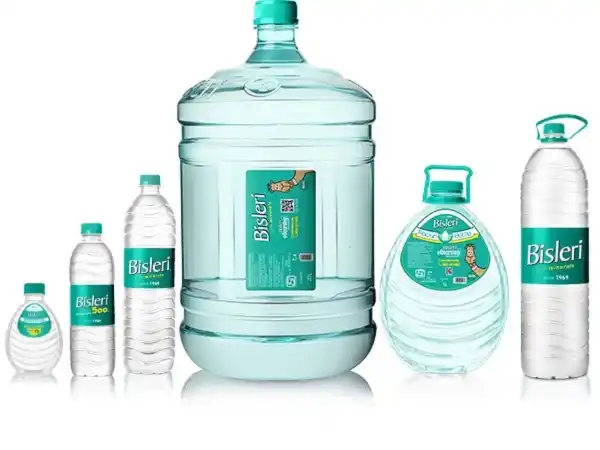
Over the years, Bisleri expanded its product portfolio and packaging formats to reach different consumer segments.
Some important milestones include:
- 1991: Introduction of the 20-litre pack for homes and offices.
- 2000: Launch of the 1.2-litre Bada Bisleri bottle.
- 2006: Introduction of green packaging to distinguish the brand from competitors.
- 2006: Launch of Himalayan Spring Water.
- 2011: Introduction of Bisleri Club Soda.
- 2012: Repositioning of its premium Vedica brand.
- 2018: Launch of a vertical manufacturing plant for mineral water.
- 2020: Introduction of Bisleri@Doorstep for home delivery.
These developments helped the company expand beyond conventional bottled water into premium products, larger packs and home delivery services.
From an Italian Name to an Indian Household Brand
Bisleri’s growth reflects the evolution of India’s packaged drinking water market. What began as a premium product for a limited group of consumers gradually became part of everyday consumption.
The company now operates in a competitive market with national and regional players, including Kinley and Aquafina. Its brand name has become closely associated with packaged water in India.
The brand has also recently come under regulatory scrutiny after FSSAI sanctioned prosecution over a water sample declared unsafe. Bisleri has disputed the findings and maintained that its products are safe for consumption.
From its Italian origins to its expansion under the Parle Group, Bisleri’s journey highlights how a product once considered a luxury became a mass-market consumer staple in India.
