


India’s proposed Northern Bullet Train Corridor could connect Delhi with Guwahati in less than eight hours, significantly reducing travel time between the national capital and the Northeast. Assam Chief Minister Himanta Biswa Sarma has shared details of the proposed high-speed rail link, which is expected to cover approximately 1,500 km and connect 10 major cities across northern and eastern India.
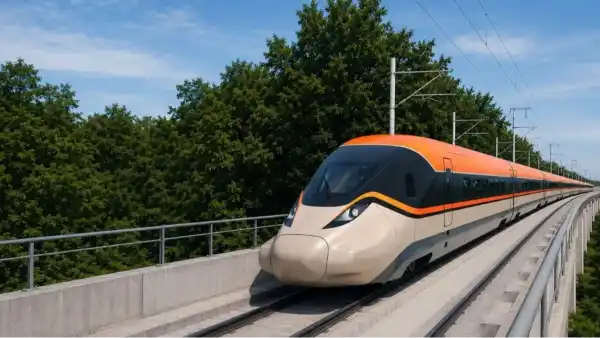
The proposed corridor will pass through Agra, Kanpur, Lucknow, Ayodhya, Varanasi, Prayagraj, Patna and Siliguri before reaching Guwahati. The journey currently takes more than 30 hours by conventional train.
10 Cities to Be Connected
The proposed Northern Bullet Train Corridor will connect the following cities:
- Delhi
- Agra
- Kanpur
- Lucknow
- Ayodhya
- Varanasi
- Prayagraj
- Patna
- Siliguri
- Guwahati
The route will pass through Uttar Pradesh, Bihar and West Bengal before extending into Assam. The extension from Siliguri to Guwahati is expected to improve high-speed connectivity to the Northeast.
Delhi to Guwahati Journey in Under Eight Hours
According to Sarma, the proposed corridor could reduce the Delhi-Guwahati journey from more than 30 hours to under eight hours. He has also indicated that fares could be lower than air travel, although official ticket prices have not yet been announced.
Railway Minister Ashwini Vaishnaw has shared indicative travel times for several routes along the proposed Northern corridor.
| Route | Proposed travel time |
| Delhi–Agra | 59 minutes |
| Delhi–Kanpur | 1 hour 45 minutes |
| Delhi–Lucknow | 2 hours 12 minutes |
| Delhi–Varanasi | 3 hours 35 minutes |
| Varanasi–Prayagraj | 33 minutes |
| Varanasi–Lucknow | 1 hour 21 minutes |
| Varanasi–Patna | 1 hour |
| Delhi–Siliguri | Around 6 hours |
| Delhi–Guwahati | Under 8 hours |
These are indicative journey estimates, not confirmed operational schedules.
PM Modi Approves Northern Corridor
The Northern Bullet Train Corridor forms part of India’s broader high-speed rail expansion plan. The Union Budget 2026-27 had announced seven new high-speed rail corridors, including Delhi-Varanasi and Varanasi-Siliguri.
Prime Minister Narendra Modi approved the Northern corridor, with the proposed route initially planned to connect Delhi and Siliguri. Following a request from the Assam Chief Minister to extend the corridor to Guwahati, the route was expanded towards the Northeast.
Sarma has thanked the Prime Minister and Railway Minister for the extension, highlighting its potential to strengthen connectivity between Assam and major economic centres.
Boost to Northeast Connectivity and Trade
The proposed high-speed rail link is expected to improve passenger connectivity, business travel and access to markets across northern and eastern India. For Assam and the wider Northeast, the extension could support tourism, trade, investment and industrial development.
The route is also expected to cross the strategically important Siliguri Corridor, commonly known as the Chicken’s Neck, which connects the Northeast with the rest of India.
However, the project cost, detailed construction schedule, station locations and expected commissioning date have not yet been announced. The proposed travel times and affordability will depend on the project’s final design and implementation.
