


Prime Minister Narendra Modi on November 15 declared that India had become free from Naxalism and Maoist terror, describing it as a major milestone in the country’s development and security journey. Addressing the national Janjatiya Gaurav Diwas programme virtually from Gadchiroli, Maharashtra, he said the end of decades of violence would create new opportunities for tribal communities in regions affected by Left-Wing Extremism.
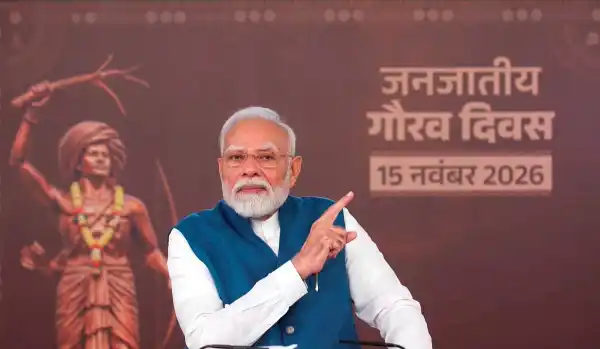
The programme marked the 151st birth anniversary of tribal freedom fighter Dharti Aaba Bhagwan Birsa Munda. On the occasion, the Prime Minister inaugurated and laid the foundation stones for 246 development projects worth approximately ₹3,000 crore across the country.
246 Projects Focus on Tribal Development
Of the 246 projects, 173 were inaugurated, while foundation stones were laid for 73 others. The initiatives aim to strengthen education, healthcare, livelihoods, tribal heritage preservation and community infrastructure.
Key projects include:
- 38 Eklavya Model Residential Schools: To expand access to quality education for tribal students.
- 100 Multi-Purpose Centres: Established under the Pradhan Mantri Janjati Adivasi Nyaya Maha Abhiyan (PM-JANMAN) to improve access to government services and community facilities.
- 19 new Eklavya Model Residential Schools: Foundation stones were laid to expand residential education infrastructure.
- 12 Tribal Multipurpose Marketing Centres: Planned to improve market access for tribal producers and support their livelihoods.
- 42 additional projects: Foundation stones were laid for initiatives under PM-JANMAN and the Dharti Aaba Janjatiya Gram Utkarsh Abhiyan.
The Prime Minister also inaugurated the Tribal Research Institute building in Itanagar, Arunachal Pradesh, and the Ropuiliani Tribal Freedom Fighter Museum in Aizawl, Mizoram. The museum is dedicated to preserving the history and cultural heritage of the Mizo people and honouring tribal resistance against British colonial rule.
PM Modi Links End of Naxalism to Tribal Development
Speaking about the impact of Naxalism, Modi said nearly 125 districts across India had been affected by the movement in the past, with tribal communities bearing a significant share of the violence and disruption.
He said years of conflict had deprived people in affected regions of basic rights, education, employment and development opportunities. According to the Prime Minister, the improved security situation was allowing young people in these areas to pursue education and livelihoods with greater confidence.
Recalling his recent Diwali visit to Bastar in Chhattisgarh, he said regions once associated with fear were now witnessing changes and renewed hope.
Modi also highlighted poverty reduction as another major achievement. Citing a recent World Bank report, he said nearly 50 crore people had moved out of extreme poverty over the past 12 to 13 years. He attributed the progress to collective efforts and welfare initiatives covering housing, healthcare, electricity, sanitation and financial inclusion.
Focus on Education, Healthcare and Livelihoods
The Prime Minister highlighted government programmes aimed at improving living conditions in tribal and remote regions.
He referred to the PM-JANMAN scheme and the Dharti Aaba Janjatiya Gram Utkarsh Abhiyan as key initiatives supporting access to basic services and infrastructure. He also highlighted the role of Eklavya Model Residential Schools in providing educational opportunities to tribal children.
The Tribal Multipurpose Marketing Centres are expected to help tribal producers connect with markets and improve their economic participation. Projects covering healthcare, community facilities and village infrastructure are also intended to address development gaps in underserved areas.
Janjatiya Gaurav Diwas Marks Birsa Munda’s Legacy
Janjatiya Gaurav Diwas is observed every year on November 15 to mark the birth anniversary of Bhagwan Birsa Munda and recognise the contributions of India’s tribal communities and freedom fighters.
The observance was instituted in 2021 to bring greater national attention to tribal history, culture and contributions to India’s freedom movement.
During the programme, Modi recalled the contributions of tribal leaders and freedom fighters, including Birsa Munda, Sidho-Kanho, Tantya Bhil, Rani Gaidinliu and Alluri Sitarama Raju.
The ₹3,000-crore development package and the Prime Minister’s announcement on Naxalism placed tribal welfare, security and infrastructure at the centre of this year’s observance. While the government described the end of Naxalism as a major achievement, the long-term impact will depend on sustained development, public services and livelihood opportunities reaching communities in formerly affected regions.
