


Bharti Airtel Founder and Chairman Sunil Bharti Mittal has called on India to retain control over the “kill switch” for satellite communications operating within the country, warning against dependence on a single foreign provider. His remarks come as the government finalises security conditions for the commercial rollout of satellite broadband services in India.
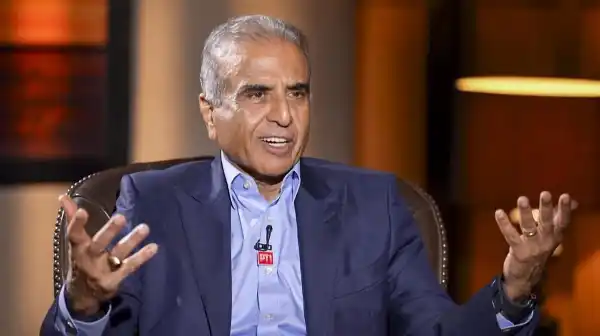
“The kill switch, as we call it, should not be sitting somewhere else. India must have control over its own space destiny,” Mittal said in an interview with PTI marking the 50th anniversary of Bharti Enterprises.
The kill switch refers to the ability to disable, restrict or throttle satellite network services for an individual user, a particular region or an entire country through operator control systems and ground gateways.
Satellite Control Is a National Security Priority
Mittal said control over satellite communication infrastructure has become increasingly important as warfare and national security operations become more dependent on space-based technologies.
Satellite networks support communications used in military operations, drones, cyber activities and guided missile systems. If control over these networks rests with foreign operators or systems located outside India, critical connectivity could be affected by decisions taken beyond the country’s jurisdiction.
Mittal stressed that India must establish safeguards to monitor satellite equipment and communications entering the country. He also called for all relevant traffic to be routed through India.
He cited the Ukraine conflict as an example of the growing strategic importance of satellite connectivity, noting that the country uses both Starlink and OneWeb services.
India Needs Multiple Satellite Providers
Mittal cautioned that India should not depend on a single company or country for satellite communications.
“You can’t just depend on one country or one company,” he said, arguing that multiple providers would help strengthen the country’s communication infrastructure and security.
Three companies currently hold satellite communication licences in India: Bharti-backed Eutelsat OneWeb, Reliance’s Jio Satellite Communications and Elon Musk’s Starlink. However, commercial operations depend on the completion of regulatory and security clearances.
Mittal said OneWeb’s infrastructure was ready and that the company was awaiting government approval to begin commercial services. He also stated that its terminals had been used by the government for emergency communication requirements.
Satellite Broadband to Complement Existing Networks
Mittal does not expect satellite broadband to replace conventional mobile and fibre networks in the foreseeable future. Instead, he sees satellite connectivity as a complementary technology, particularly in areas where terrestrial infrastructure is difficult to establish.
Remote villages, forests, hills, mountains, high seas and aviation routes are among the areas where satellite broadband could help address connectivity gaps.
He also pointed out that satellite infrastructure involves significant investment, with satellites requiring replacement every five to six years.
The rollout of satellite broadband in India is therefore expected to involve a combination of fibre, mobile networks and satellite services.
Security Clearances Will Shape India’s Satellite Broadband Market
The government’s security requirements and spectrum allocation framework will play a key role in determining when satellite operators can begin commercial services.
While OneWeb, Jio Satellite and Starlink are competing for a share of India’s growing connectivity market, Mittal’s remarks underline the importance of national security, data sovereignty and operational control alongside commercial expansion.
As satellite networks become part of critical digital infrastructure, India faces the challenge of encouraging competition and investment while ensuring that control over essential communication systems remains within its jurisdiction.
