


India’s Defence Research and Development Organisation (DRDO) is targeting the completion of developmental trials for the Astra Mk3, or Gandiva, long-range air-to-air missile by the end of 2028. The programme aims to strengthen the Indian Air Force’s ability to engage aerial targets at extended distances using an indigenously developed missile system.
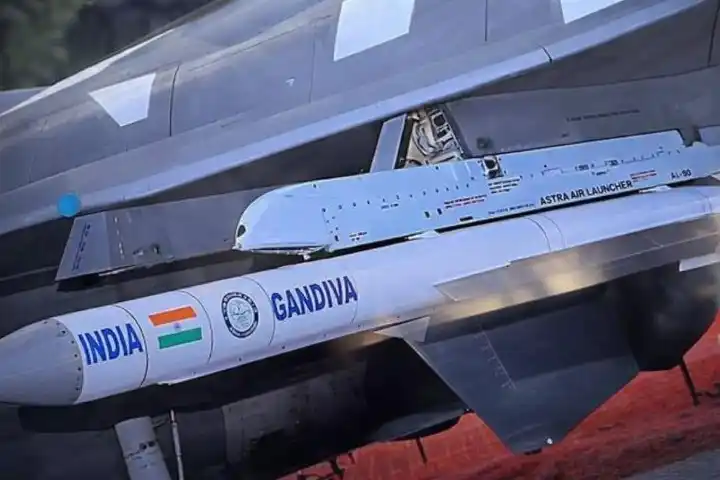
According to a report published by defence news website IDRW on October 27, 2026, DRDO plans to complete developmental testing before moving towards production clearance. The timeline remains subject to the progress and results of the planned trials.
Su-30MKI Integration Planned
The next phase is expected to involve integrating the missile with the Indian Air Force’s Su-30MKI fighter aircraft. Planned activities include captive-carry tests and systems integration to assess aerodynamic compatibility, missile separation, communication links and safe release under different flight conditions.
According to the report, these activities could begin in 2027 and take approximately 12–14 months. Live-firing trials would follow to evaluate the missile’s performance against representative aerial targets.
The reported schedule places the completion of developmental trials around the end of 2028. User trials by the Indian Air Force would follow, with production clearance potentially coming later, subject to successful testing.
SFDR Technology Enables Extended Range
Astra Mk3 is being developed around Solid Fuel Ducted Ramjet (SFDR) propulsion. Unlike conventional rocket motors that deliver most of their thrust during an initial burn, ramjet technology is designed to sustain propulsion during more of the missile’s flight.
This can help the missile retain speed and energy over longer distances, improving its potential to engage manoeuvring targets. Published reports have cited a projected maximum range of around 340 km under specific operating conditions. This remains a development target rather than a confirmed operational engagement range.
DRDO demonstrated the SFDR propulsion system on February 3, 2026, at the Integrated Test Range in Chandipur, Odisha. The Ministry of Defence said the nozzle-less booster, ramjet motor and fuel-flow controller performed as expected during the test. The demonstration was a propulsion milestone, not a full operational trial of the complete Astra Mk3 missile.
Missile Designed for Multiple Fighter Platforms
The Astra Mk3 is intended to provide the Indian Air Force with a longer-range option within its indigenous air-to-air missile programme. The missile has been associated with platforms including the Su-30MKI and future Tejas variants, although integration and operational clearance must be established through testing.
Its extended-range capability could be useful against high-value airborne targets, such as airborne early-warning aircraft and aerial refuelling tankers. However, the missile’s actual performance will depend on factors including launch conditions, target movement, guidance and electronic-warfare resistance.
The Astra Mk3 programme forms part of India’s broader effort to strengthen domestic defence technology and reduce reliance on imported weapon systems. Its entry into service will depend on completing developmental trials, user evaluations and the required approvals.
