


India and New Zealand have signed a Memorandum of Cooperation (MoC) to enable the electronic exchange of origin data for goods traded between the two countries. The agreement aims to simplify cross-border trade, strengthen customs cooperation and help businesses make better use of benefits under the India-New Zealand Free Trade Agreement (FTA).
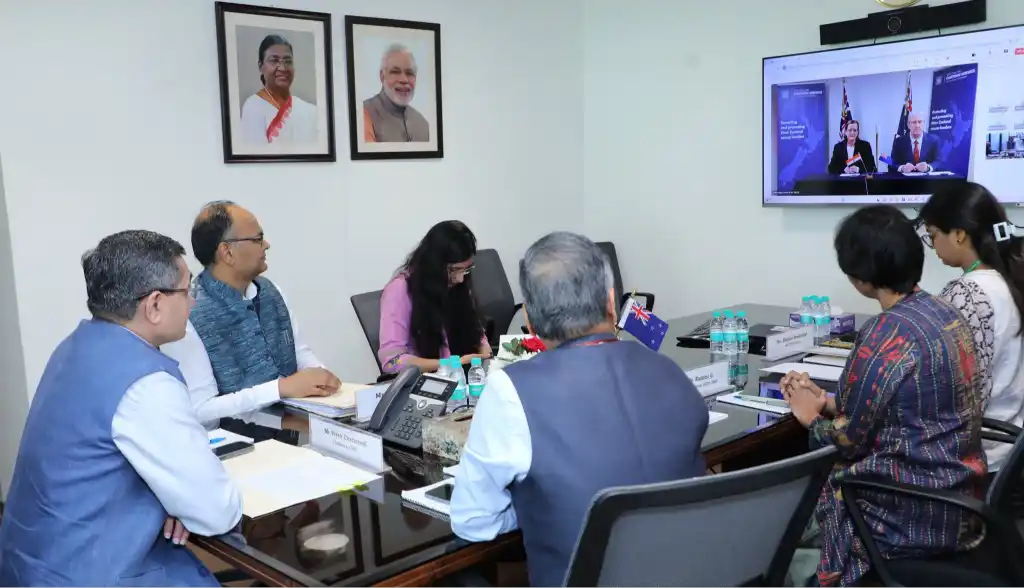
The MoC was signed on October 19, 2026, by the Central Board of Indirect Taxes and Customs (CBIC) and the New Zealand Customs Service (NZCS). It came just before the India-New Zealand FTA entered into force on October 20, 2026. CBIC Chairman Vivek Chaturvedi and New Zealand Customs Service Comptroller and Chief Executive Christine Stevenson signed the agreement.
How Will the Digital Trade Pact Work?
Under the arrangement, India and New Zealand will exchange information about the origin of traded goods electronically and in advance. This will help customs authorities access relevant information more efficiently and improve coordination between the two countries.
The system is expected to reduce information gaps, improve operational efficiency and make cross-border trade more secure and predictable. It could also provide greater certainty to importers and exporters by helping streamline customs procedures.
How Will Businesses Benefit?
The electronic exchange of origin data is expected to support the implementation of trade facilitation measures under the FTA. It will help eligible businesses access preferential tariff treatment and other trade benefits more efficiently.
Rules of origin determine whether a product qualifies as originating in a particular country under a trade agreement. Meeting these requirements is important for businesses seeking to claim reduced or zero customs duties on eligible goods.
The agreement reflects both countries’ efforts to use digital technology and improved information sharing to make trade procedures simpler and more reliable.
India-New Zealand FTA Enters Into Force
The digital cooperation pact follows the implementation of the India-New Zealand FTA on October 20, 2026. The broader trade agreement aims to expand market access, strengthen investment ties and create opportunities for businesses and professionals in both countries.
The electronic data exchange arrangement is expected to support the effective use of these trade benefits by making customs processes more efficient and providing greater clarity for traders.
The move marks another step in strengthening economic ties between India and New Zealand through digitalisation and closer customs cooperation.
