


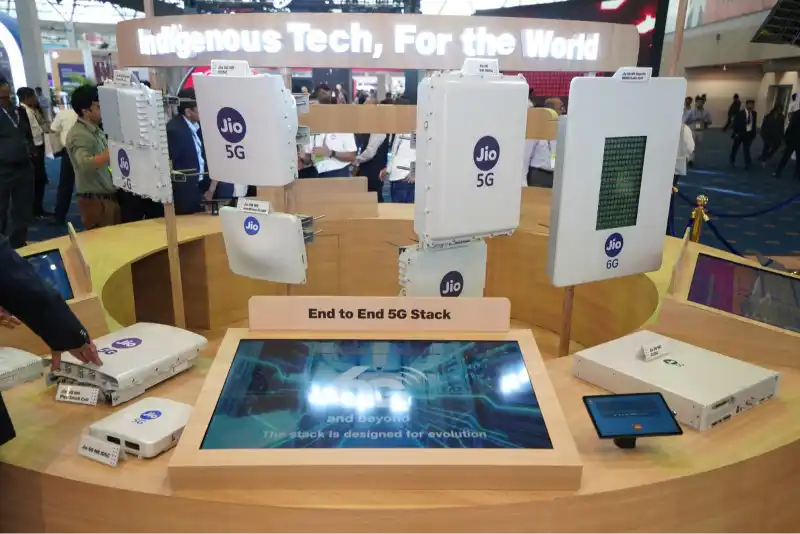
Reliance Jio is preparing for the next generation of mobile connectivity, saying India could be among the first countries to roll out 6G when global standards are finalised in 2030. The telecom operator has showcased its pre-6G technology stack and Giga MIMO Radio at the India Mobile Congress (IMC) 2026 in New Delhi.
According to Jio, 6G networks could deliver up to five times the capacity of existing 5G networks while reducing latency by nearly 10 times. These improvements could enable networks to handle more data and connected devices simultaneously, while responding to commands much faster.
The technology could support emerging applications in real-time artificial intelligence, holographic video, healthcare, education and other digital services that require high-speed connectivity and minimal delays.
A key highlight of Jio’s showcase is its Giga MIMO Radio, which the company describes as India’s first. Jio has also unveiled a common baseband unit designed to support both 5G and 6G networks, potentially helping streamline the transition between the two technologies.
Beyond hardware development, Jio is seeking a larger role in shaping global telecommunications standards. The company says it has filed more than 8,000 patents, including hundreds related to 6G, and has made over 934 contributions to global standards.
Jio expects 6G to make AI-powered services more responsive and reliable. At IMC 2026, it highlighted potential applications for farmers, doctors and students, where faster access to information could improve service delivery and decision-making.
The company is also working towards AI-native and quantum-safe networks. AI-native networks are designed to integrate artificial intelligence into network operations, while quantum-safe technologies aim to protect communications against potential future threats from quantum computing.
Jio’s 6G strategy extends beyond operating next-generation mobile networks. The company aims to strengthen its presence across hardware, software, patents and international standards, positioning India as a contributor to the development of future telecom technologies.
With global 6G standards expected to take shape around 2030, Jio’s current development efforts reflect the growing competition among telecom companies to establish technological capabilities ahead of the next connectivity cycle.
