


India’s new fee structure for certain Unified Payments Interface transactions could create an annual revenue pool of around ₹27,000 crore by fiscal 2028, with banks expected to receive the largest share of the resulting profits, according to Bernstein.
The research firm estimates that the Merchant Discount Rate (MDR), which merchants pay banks and other payment providers for processing transactions, could generate nearly ₹20,000 crore in annual profits for the payments ecosystem by FY28.
Banks could retain around 60% of this profit pool, or nearly ₹12,000 crore, Bernstein analysts including Pranav Gundlapalle said in a research note.
The additional earnings could increase banking-sector profits by around 3%, although the impact is expected to vary significantly between banks.
State Bank of India is projected to gain the most among banks that issue payment accounts, supported by its large share of savings accounts. Axis Bank and Yes Bank could also benefit because of their significant roles as payment service providers in the UPI ecosystem.
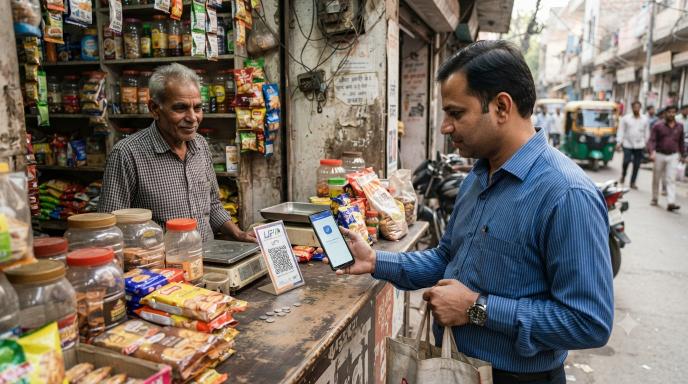
Under the new fee structure, businesses will pay up to 0.4% on UPI merchant transactions above ₹2,000 from October 15. The charge will be capped at ₹300 for transactions of ₹75,000 or more.
The fee is expected to apply to most UPI merchant payments by value. Data from the National Payments Corporation of India showed that transactions above ₹2,000 accounted for 67% of the total value of payments made to merchants in August, despite representing only around 4% of transaction volumes.
Bernstein estimates that the profit pool could grow at around 20% annually over the next several years as UPI merchant payments continue to expand.
However, the impact on individual banks will depend on their position within the payments ecosystem. SBI is estimated to account for around 25% of an issuer profit pool of approximately ₹8,000 crore.
Axis Bank and Yes Bank, meanwhile, have a much larger presence in UPI payment processing compared with their respective shares of the broader banking market.
Bernstein noted that the actual financial gains could vary depending on the mix of merchant and person-to-person transactions, as well as how the fees are eventually divided between banks and major payment platforms.
The new fee structure therefore has the potential to create a significant new source of revenue for India’s banking and digital payments ecosystem, while the distribution of those gains is likely to differ across individual institutions.
