


Jio Payment Solutions Limited (JPSL), a wholly owned subsidiary of Jio Financial Services, has launched cross-border payment services to help Indian businesses accept international payments and expand into global markets.
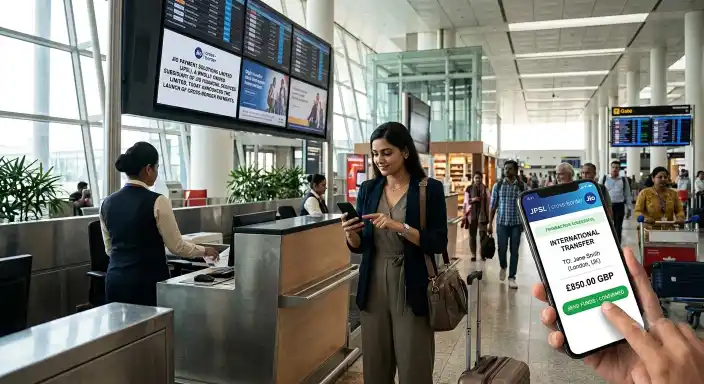
The launch follows authorisation from the Reserve Bank of India (RBI) for JPSL to operate as a Payment Aggregator for Cross-Border (PA-CB) transactions covering permitted export and import payments.
The new platform is designed to simplify international collections for Indian exporters, including MSMEs, online sellers, freelancers, creators and SaaS companies. Businesses can accept payments through virtual accounts, international cards and local payment rails across multiple markets.
JPSL said its cross-border solutions currently cover around 50% of India’s total export footprint, including markets such as the US, UK, Europe, UAE, Singapore, Malaysia and Australia. The company plans to add more local payment methods across Latin America, Southeast Asia and the Middle East.
The platform offers multiple integration options, including hosted checkouts, payment links, payment pages, recurring invoicing, embedded SDKs and white-label APIs.
JPSL is also offering T+2 settlement with no rolling reserve, allowing merchants to receive their full settlement amount each cycle and improve cash-flow management.
Security and compliance are built into the platform, with end-to-end encryption, localised data storage and transaction monitoring. JPSL said merchants can also receive FIRA/eFIRA documentation within the same working day and access automated audit and reconciliation tools.
The company has partnered with Citi for Authorised Dealer Category-1 and export collection account services, leveraging Citi’s global clearing network and compliance capabilities.
Kashinath Hariharan, MD & CEO of Jio Payment Solutions, said the new offering aims to bring global acceptance, compliance and operational efficiency together on a single platform for Indian businesses.
The launch expands JPSL’s existing payments portfolio, which already includes online and physical point-of-sale payment aggregation. With the addition of cross-border payments, the company is positioning itself as a unified payments platform for businesses operating across domestic and international markets.
