


India’s Project-75I submarine programme has gained renewed importance as China expands its underwater fleet and Pakistan moves ahead with its Chinese-built Hangor-class submarines.
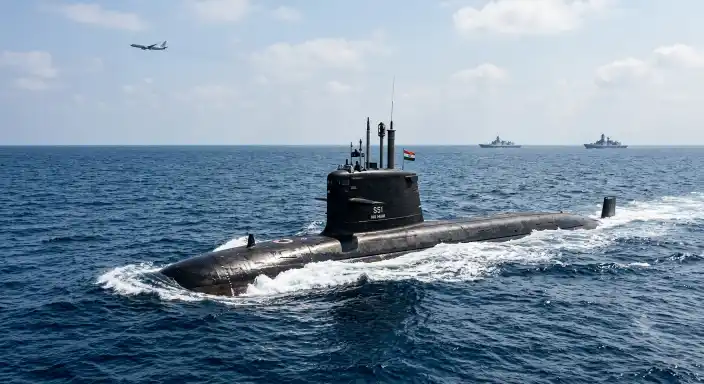
India’s ageing conventional submarine fleet faces a growing capability gap. The Kalvari-class submarines entered service without operational air-independent propulsion, while older Sindhughosh and Shishumar-class submarines are nearing retirement.
Project-75I aims to address this gap with six advanced conventional submarines equipped with air-independent propulsion, giving them longer underwater endurance and improved stealth. The submarines are expected to strengthen India’s sea-denial, surveillance and anti-submarine warfare capabilities.
Pakistan commissioned its first Hangor-class submarine in April 2026 as part of an eight-submarine programme with China. Meanwhile, China operates an estimated 60–65 submarines, adding pressure across the Indian Ocean region.
The Project-75I programme also has a major technology-transfer component. Mazagon Dock Shipbuilders will build the submarines in India with technology and expertise from Germany’s TKMS. The programme is expected to gradually increase indigenous content and could support India’s future Project-76 indigenous submarine programme.
The proposal has cleared several major technical, commercial and financial stages and is now awaiting final strategic approval. If the contract is signed in 2026, the first submarine is expected to be delivered around seven years later.
With regional submarine capabilities growing rapidly, Project-75I could play a key role in strengthening India’s underwater deterrence while building long-term domestic submarine manufacturing and design capabilities.
