


Prime Minister Narendra Modi has announced that the Centre will establish fast-track courts to ensure speedy trials and strict punishment for those involved in examination paper leak cases. The move, he said, is aimed at protecting the future of students and strengthening the integrity of India’s examination system.
In a post on X, Modi said that the welfare of young people remains the government’s highest priority. He stated that the concerned authorities have been directed to take all necessary steps to set up fast-track courts and ensure swift action against those responsible for paper leaks.
“The future of our youth is of utmost importance. Those who attempt to destroy it will face stringent punishment,” the Prime Minister said.
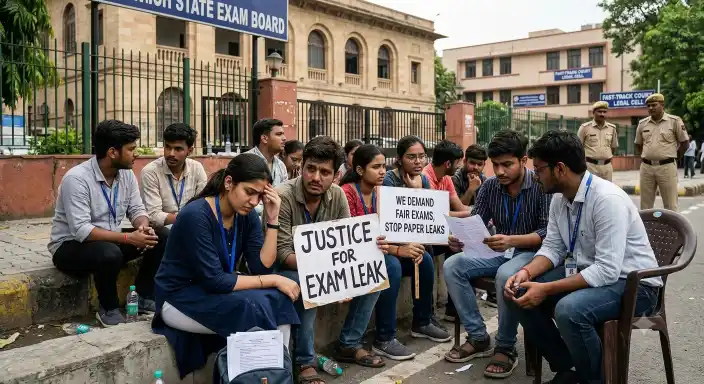
The announcement comes as students continue protesting at Delhi’s Jantar Mantar over the NEET paper leak controversy, demanding accountability and reforms in the examination process.
Congress leader and Leader of Opposition Rahul Gandhi criticised the government’s announcement, alleging that the Centre itself was responsible for damaging the country’s education system. He accused the government of protecting those responsible for irregularities and reiterated the protesters’ demands, including the removal of Union Education Minister Dharmendra Pradhan, an apology to students, and action against those accused of assaulting protesters.
Earlier this week, Rahul Gandhi led a protest march towards the Prime Minister’s residence, joined by Samajwadi Party chief Akhilesh Yadav and Congress leader Priyanka Gandhi. The march ended in a confrontation with security personnel, after which several opposition leaders were briefly detained.
The latest announcement follows Prime Minister Modi’s recent remarks during the NDA parliamentary party meeting, where he described examination paper leaks as a “grave sin” and promised strict action against those who jeopardise students’ futures.
According to Parliamentary Affairs Minister Kiren Rijiju, the Prime Minister also stressed that the NEET paper leak should be viewed as a national concern rather than a political issue, urging all stakeholders to work together to safeguard the interests of students.
