


Spain secured their second FIFA World Cup title after defeating defending champions Argentina 1-0 in a tense final at New York New Jersey Stadium. The victory completed a remarkable international run for La Roja, who dominated possession and created several chances before finally breaking Argentina’s resistance in extra time.
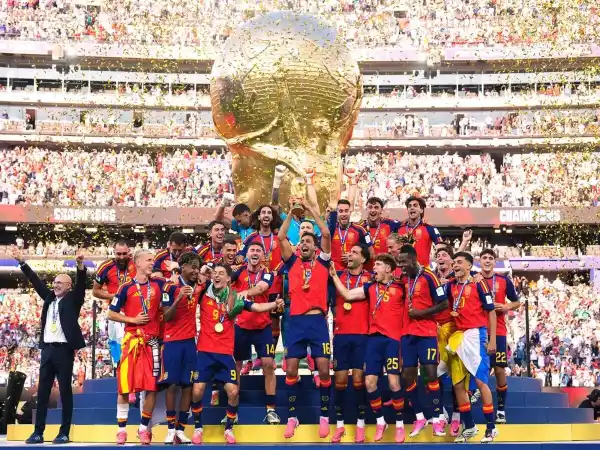
The decisive moment came in the 106th minute when substitute Ferran Torres scored the winning goal. Pedro Porro delivered a cross into the box, Nico Williams kept the move alive with a header, and Torres fired a powerful finish past Argentina goalkeeper Emiliano Martínez to seal Spain’s triumph.
Argentina’s defence had held firm for most of the match, with Martínez producing a record 11 saves in a World Cup final. However, Spain’s constant pressure eventually proved too much. Argentina failed to register a shot on target during regular time as Spain controlled the game with their passing and possession.
Argentina’s challenge became even harder after Enzo Fernández was sent off in the second half of extra time after receiving a second yellow card for a foul on Pau Cubarsí. Despite playing with 10 men, Argentina managed to stay in the contest but could not find an equaliser.
The defeat ended Argentina’s hopes of becoming the first team since Brazil in 1962 to win consecutive men’s World Cup titles. Lionel Messi, who was aiming for another historic achievement, finished the final with limited opportunities as Spain’s organised defence kept him under pressure.
Spain’s victory marked their second men’s World Cup success after their 2010 triumph. The win also highlighted the strength of a new generation of Spanish players, with coach Luis de la Fuente praising the team’s unity, determination and commitment throughout the tournament.
While Spain celebrated another global title, Argentina accepted the defeat with pride, with coach Lionel Scaloni thanking his players for their effort and acknowledging the achievements of a team that had reached the final stage of the biggest tournament in football.
