


Pawan Chandana is redefining the traditional idea of academic success. The entrepreneur recently revealed that he scored only 51 marks in mathematics during his school years, a subject often considered crucial for engineers and scientists.
Despite average grades, Chandana pursued engineering and later joined Indian Space Research Organisation (ISRO), where he worked on advanced propulsion systems and launch vehicle programmes. His years at ISRO helped shape his understanding of India’s space ecosystem and inspired him to think beyond conventional career paths.
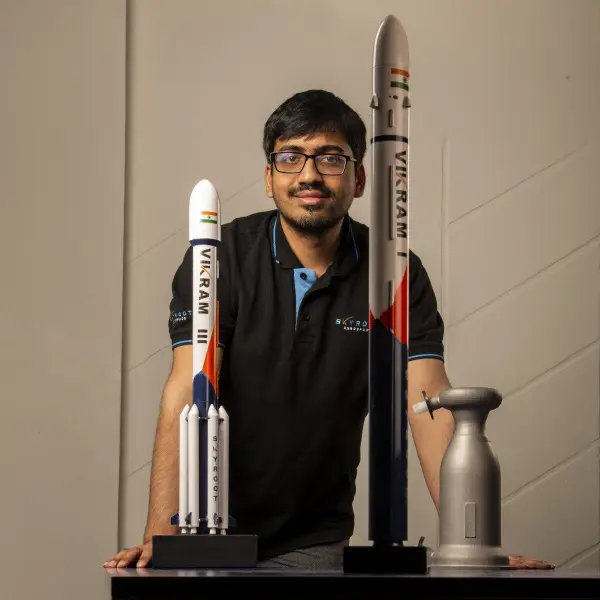
In 2018, Chandana co-founded Skyroot Aerospace with the goal of lowering the cost of accessing space and enabling private participation in the sector.
The company achieved a historic milestone in 2022 when it successfully launched Vikram-S, India’s first privately developed rocket to reach space. The achievement marked a turning point for India’s private space industry and demonstrated the potential of homegrown space startups.
Today, Skyroot Aerospace is among the country’s most prominent space-tech ventures, backed by leading investors and focused on developing reusable and cost-effective launch solutions.
Chandana’s story serves as a powerful reminder that academic scores do not always determine future success. Persistence, learning, innovation and the courage to pursue ambitious goals often matter far more in the long run.
