


The proposed Kerala High Speed Railway (KHSR) is set to transform intercity travel with a fully elevated, standard-gauge double-line system designed to drastically cut travel time across the state. Once completed, passengers will be able to travel from Thiruvananthapuram to Kannur in approximately three and a half hours.
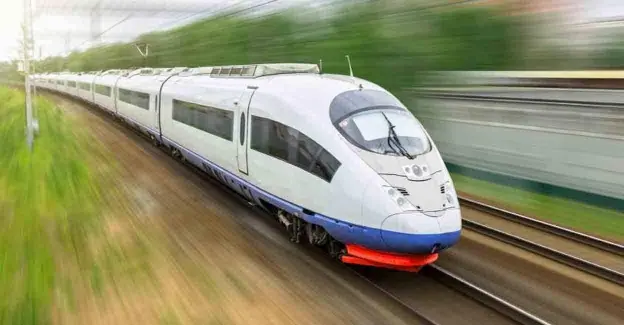
Large-Scale Corridor with Multiple Stations
The project spans 473.20 km, connecting Thiruvananthapuram (Poojapura) to Kannur (Mundayad), with 23 planned stations along the route. The average distance between stations is about 21.5 km.
According to details from the Ponnani regional office of the Delhi Metro Rail Corporation (DMRC), which has submitted an interim report to both the state and central governments, the project cost is estimated at ₹60,000 crore.
Speed and Train Operations
The corridor is designed for a maximum speed of 200 kmph, while operational speeds are expected to range between 140 kmph and 180 kmph.
Initially, services will run with 12-coach trains seating around 800 passengers. Platforms are being designed to accommodate 16-coach trains in the future. All travel will be reservation-based, with no provision for standing passengers.
Frequency and Passenger Capacity
During peak hours (6 am to 11 am and 4 pm to 8 pm), trains will run every 20 minutes, while non-peak services will operate every 40 minutes.
At launch, the system is expected to handle around 54,400 passengers daily. With reduced headways of five minutes, capacity could expand to 2.28 lakh passengers per day.
Connectivity and Infrastructure Design
The route will connect Kerala’s three major airports and will include a dedicated 10 km road link to the upcoming Kannur airport.
The project adopts a standard gauge system, reducing axle load to 15 tonnes compared to 25 tonnes in broad gauge systems. This is expected to lower construction and operational costs while aligning the project with global high-speed rail standards.
Land Use and Environmental Plan
Land acquisition for the project is designed to be minimal, requiring a 20-metre-wide corridor. After construction, portions of this land may be leased back to original owners for farming or grazing under specific conditions.
The project also aims to become a green rail corridor powered entirely by captive solar energy. Excess electricity generated is expected to be supplied to the Kerala State Electricity Board (KSEB).
Expansion and Future Growth
Once approved, construction is expected to be completed within five years. The design includes provisions for future expansion, including extensions from Kannur to Kasaragod, Kozhikode to Kalpetta, Pattambi to Palakkad, and Thrissur to Palakkad.
Cost and Long-Term Vision
The total estimated cost stands at ₹60,000 crore, averaging around ₹127 crore per kilometre. The project is positioned as a long-term infrastructure backbone for Kerala, aimed at reshaping regional mobility and economic connectivity.
