


Indian Railways is planning to make artificial intelligence-based cameras a mandatory requirement in all future train surveillance systems. The move comes as the railways puts new procurement orders on hold while revised technical guidelines are being finalised.
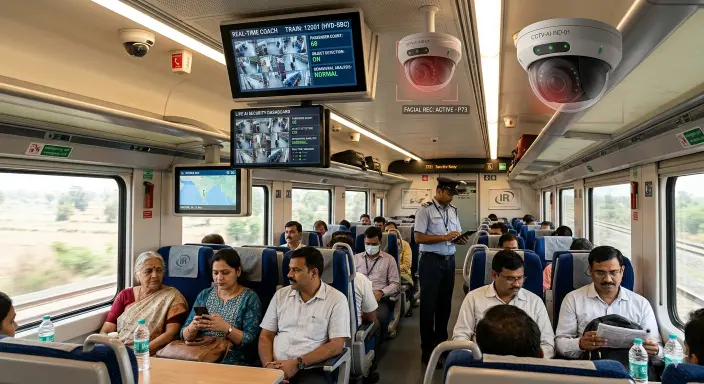
Officials said that ongoing supply contracts will continue without interruption, but fresh purchases will only resume after updated specifications are issued. The review is being carried out in response to rapid advancements in AI technology since the existing framework was introduced.
Existing System Under Review
The current surveillance standards were first defined by the Research Designs and Standards Organisation in March 2018 for internet protocol-based CCTV systems in trains. Since then, the guidelines have been revised seven times, with the latest update issued in June 2025.
These systems primarily record video footage inside and outside coaches for post-incident review. However, they do not include capabilities such as object detection, defect identification, or predictive maintenance.
Officials noted that the present setup is largely reactive in nature, helping reconstruct events after incidents rather than preventing them in real time.
Shift Toward Real-Time Intelligence
Under the proposed revision, Indian Railways is expected to introduce AI-enabled surveillance protocols that can offer real-time analysis and predictive capabilities.
A senior official said the new systems will go beyond passive recording and introduce smarter monitoring tools capable of identifying potential risks as they occur.
The railways have already taken early steps in this direction, including the use of AI-based facial recognition systems. In February, such a system was reported to have identified repeat offenders at Visakhapatnam railway station, marking a shift toward real-time enforcement.
Technology Upgrade and Cost Considerations
Industry experts believe that existing camera infrastructure may not need full replacement if it meets basic technical requirements such as resolution, frame rate, and night vision quality.
According to experts, the AI processing layer can be handled through backend servers equipped with sufficient computing power, reducing the need for large-scale hardware replacement.
However, AI-enabled surveillance systems are significantly more expensive, with estimates suggesting costs could be three to four times higher than conventional CCTV setups.
The planned shift reflects Indian Railways’ broader push toward smarter and more predictive safety systems. By integrating AI into train surveillance, the network aims to move from passive monitoring to real-time intelligence, improving both safety and operational efficiency across the system.
