


Tata Electronics has emerged as Apple’s largest contract manufacturing partner in India by workforce size, marking a major shift in the country’s electronics manufacturing landscape. According to a report by The Economic Times, the company now employs around 75,000 people, surpassing Taiwanese giant Foxconn in total headcount.
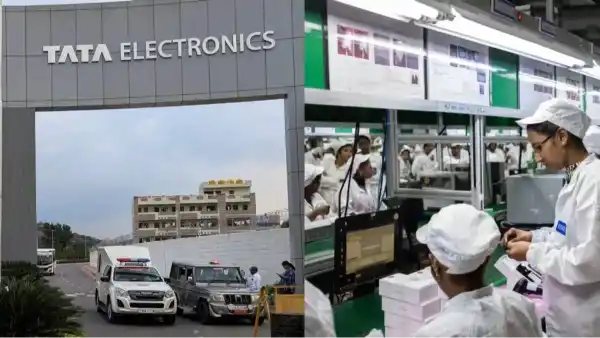
What makes this rise striking is the speed of expansion. When Tata Electronics signed its deal with Apple just two years ago, it had roughly 15,000 employees. Since then, its workforce has grown nearly four times, reflecting an aggressive and sustained scale-up in operations.
Much of this growth has been driven by its large manufacturing base in Hosur, Tamil Nadu, along with the integration of operations acquired from Wistron and Pegatron in India. These moves have helped Tata quickly build the capacity needed to operate within Apple’s highly structured global supply chain.
The company’s hiring push has been intentional and focused on building scale for high-volume iPhone production. Its workforce is now distributed across multiple facilities, strengthening its position in Apple’s India ecosystem, which also includes Foxconn as a key partner.
However, this leadership in headcount may be temporary. Foxconn is expected to expand its upcoming facility in Devanahalli, which could eventually restore its lead in workforce size. Even so, Tata Electronics’ rapid rise stands out in a sector long dominated by established East Asian manufacturers.
Tata Electronics began operations only in 2020, yet it has quickly built manufacturing capabilities strong enough to compete at a global level. Industry observers note that the company has improved in areas such as process control, supplier coordination, and production ramp-up—key requirements for assembling complex devices like iPhones.
Despite this progress, the company is still in an early growth phase. The next challenge lies in moving beyond assembly into deeper value creation, including better localisation, improved quality control, higher yields, and stronger multi-site resilience. Long-term plans also include expansion into semiconductor manufacturing and advanced packaging.
India, meanwhile, continues to strengthen its position as a global electronics hub, supported by policy incentives, skilled labour, and rising localisation. Apple’s growing presence has played a major role in this shift, with iPhones emerging as India’s largest export in 2025 at around $23 billion, much of it shipped to the United States.
