


The Vizhinjam International Seaport in Kerala has emerged as a major alternative hub for international shipping as tensions in the Middle East escalate and Iran closes the Strait of Hormuz, disrupting access to Gulf ports.
More than 100 ships from eight international shipping companies are now seeking permission to dock at Vizhinjam after being stranded in the Middle East and unable to berth at ports such as Dubai due to the ongoing conflict. Most of these vessels are large motherships headed to destinations across the world.
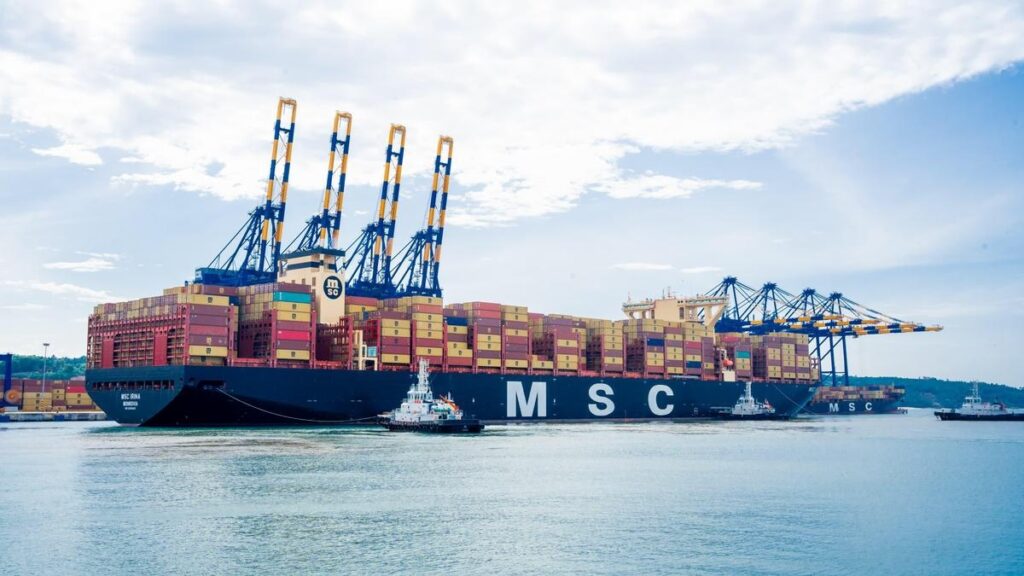
Vizhinjam’s strategic advantage lies in its location just 10 nautical miles from the international east–west shipping route, making it far more accessible than other Indian ports. By comparison, ships must travel an additional 700 nautical miles to reach Mumbai Port and 1,150 nautical miles to reach Mundra Port, adding more than 50 hours of extra sailing time.
However, despite the surge in demand, the port is currently unable to fully capitalize on the opportunity because of limited berthing space. Its existing 800-meter container berth can accommodate only two motherships or four feeder vessels at a time, and much of that capacity is already occupied by Mediterranean Shipping Company (MSC), which currently handles most of the port’s traffic.
Vizhinjam has rapidly become one of India’s busiest and fastest-growing ports, now operating around the clock. So far, 869 ships have called at the port, handling over 18.20 lakh containers, with an average of 60 ships arriving each month.
To meet rising demand, a ₹10,000 crore expansion is underway under the next phase of development by Adani Vizhinjam Port Private Limited. By 2028:
- The container berth will expand from 800 meters to 2,000 meters
- The pier length will increase from 3.1 km to 4 km
- Berthing capacity will rise from two large motherships to five simultaneously
Additionally, with the completion of the IOC liquid terminal, Vizhinjam will gain ship refuelling capabilities, allowing long-distance vessels traveling between Southeast Asia and Europe to refuel directly near the international shipping lane.
If Middle East tensions persist, shipping demand at Vizhinjam is expected to rise even further, positioning the port as one of the most strategically important maritime hubs in the Indian Ocean.
