


The Indian Navy, along with DRDO, is steadily developing the design framework for its next-generation aircraft carrier, the Indigenous Aircraft Carrier-III (IAC-III), also referred to as INS Vishal. While approval is still awaited for a second Vikrant-class carrier to meet short-term operational needs, long-term planning is already focused on a far more advanced and larger warship.
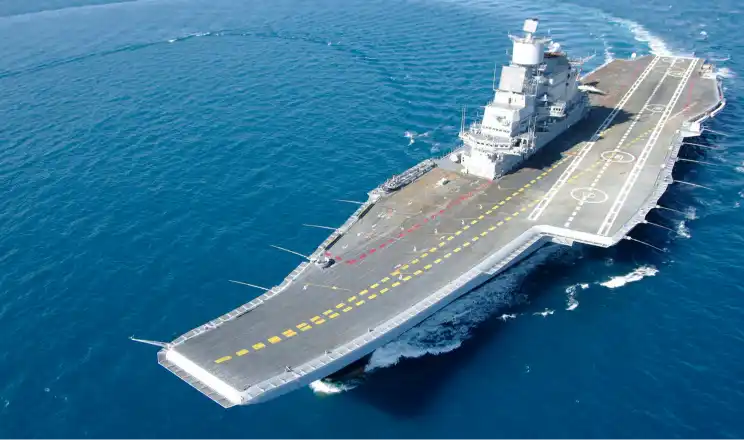
Recent progress in technology demonstrators developed by DRDO and the Aeronautical Development Agency is shaping key aspects of the future carrier. These advancements are especially influencing the integration of unmanned systems and manned–unmanned teaming, which is expected to be central to the ship’s air operations.
INS Vishal is expected to be a major upgrade over INS Vikrant, with a displacement of around 65,000 to 70,000 tonnes and the capacity to operate more than 50 aircraft. The Navy has long envisioned a larger carrier, but budget constraints initially led to plans for a second Vikrant-class ship to ensure immediate fleet strength while the more ambitious design is developed.
By 2026, the Navy had already moved forward with proposals for this intermediate carrier, helping maintain a three-carrier capability in the near term. The IAC-III, however, remains the long-term goal, with commissioning expected in the 2030s.
A major focus of INS Vishal will be the integration of unmanned combat systems alongside fighter aircraft such as Rafale M and the future Twin Engine Deck Based Fighter. This shift is driven by rapid progress in indigenous stealth drone projects, particularly DRDO’s successful Stealth Wing Flying Testbed, which demonstrated autonomous flight and stealth features.
These technologies are feeding into the development of the Ghatak unmanned combat aerial vehicle, which is expected to play a major role in the carrier’s air wing. The planned naval version of this drone will allow the carrier to deploy a mix of manned fighters and autonomous systems for surveillance, electronic warfare, and strike missions, reducing risk to pilots in high-threat environments.
The carrier is also expected to operate a wide range of unmanned platforms, including medium-altitude long-endurance drones, rotorcraft, and collaborative combat drones under a naval networked system. Inspired by “loyal wingman” concepts, these drones will assist manned aircraft in reconnaissance, jamming, and precision attacks.
High-altitude long-endurance UAVs are also expected to enhance long-range maritime surveillance, extending the carrier group’s situational awareness across the Indian Ocean region.
On the engineering side, INS Vishal is planned as a technologically advanced vessel featuring a CATOBAR launch system, possibly using electromagnetic aircraft launch technology. It may also adopt nuclear or integrated electric propulsion systems to support its high-energy requirements, including advanced sensors and future weapon systems.
The design also emphasizes automation in ship operations and maintenance, which is expected to reduce crew requirements and improve efficiency compared to older carriers.
Currently, India operates two aircraft carriers, INS Vikramaditya and INS Vikrant. A second Vikrant-class carrier is being considered to ensure continuous operational readiness, while INS Vishal represents the long-term vision for a far more advanced and capable naval platform.
